Tag Archives: Stress management

Taking time out

When was the last time you actually did nothing ? Not reading, working, gardening, sleeping, cooking etc just literally sat down and did no thing which is what doing nothing is all about.

Our bodies and minds need time out from the frantic pace of life and yet there is often a guilty feeling associated with just sitting down doing nothing. I know there are many things that we do for relaxation such as reading, arts etc but this still requires us to to engage with some action whereas doing nothing asks no more that to be. Be present with your body as it is and the breath. It can be challenging. We fidget, notice the mind swirling with thoughts and start planning our next activity etc but it is worth persevering with the practice and noticing the discomfort that arises. After a while the process becomes easier and you will find yourself feeling a lot more rested and refreshed than if you had been relaxing with a book or watching an interesting show.

The first step is in stilling the body and allowing yourself to be exactly where you are. Noticing where you are and how you are sitting. The next step is to become aware of your breathing. Examining the depth, speed, temperature etc of your natural breath. Then you can employ either a count of the breath or a simple mantra to keep the mind from wandering as you watch your breath. You only need to practice for short time 5 or 10 mins. Try practising this a few times a week and see how it works for you. I would be interested in your feedback.

Here is a little guided session to get you started.

Om Shanti

At this time of year all you need is presence not presents!

Another year has flown by and we may find ourselves caught up in the rush to get things done or ready. Often we can place enormous pressure on ourselves and others without realising it until we collapse sometime Christmas afternoon! 

Yoga is a reminder that even though things seem to be speeding up we can slow down. It is OK to take time out, to say no thanks and just spend time with the breath. Even a few minutes each day of sitting quietly and watching where you feel the breath, focusing in the movement of the body with the breath can make a great deal of difference with how we manage what is often referred to as the “silly season”.

I guess it gets this name because we can go a little “silly” trying to keep up with our own or others expectations but life is not really about keeping up it is about being present. If we are so busy rushing to get to everything, buy everything, see everyone, finish everything in those last few weeks of the year all we will remember is the rushing. We will miss the little pockets of joy that make Christmas special.

Take a moment to imagine yourself a child again and see it through the eyes of that child. The wonder of the warm summer evenings, the smell of a Christmas tree, the twinkling of Christmas lights, the taste of a few special treats, the closeness of friends and family. Forget about buying presents and offer your presence to others and be with the people you know and perhaps strangers in need of kindness. Be kind to yourself and take those few moments to be fully in your body and sit with your breath . Maybe even do a regular yoga nidra.

wishing you all a safe and restful festive season

Here is a little present presence for you Om Shanti

International Yoga Day 2023

June 21st marks International Yoga Day for this year coinciding as per usual with the winter solstice for those of us in the southern hemisphere and the summer one for those of you in the northern hemisphere.

The theme for this year is Vasudhaiva Kutumbakum. It is a Sanskrit phrase found in Hindu texts such as the Maha Upanishad which means “The World is One Family”. Vedic tradition mentions ” Vasudhaiva Kutumbakum” meaning all living beings on the earth are family. Now that might be something worth celebrating and acknowledging in a world that often seems so troubled!

I hope you can find something in your local area to participate in as part of this celebration. Here in Beechworth we will be having a free community relaxation session with the very special practice of Yoga Nidra for all who wish to try it. If you live nearby why not come along to the the Quercus Neighbourhood centre Weds evening at 5.30pm for half an hour ? Bring something warm to snuggle under and your yoga mat and perhaps bring a friend! For more information please email .

Changing seasons

It has been a while since my last post but life as always throws curved balls your way and plans are often destined to change to meet current needs.  As I sit here and write this I am gazing at the glorious colours of  autumn here in the southern hemisphere.  The sky is a brilliant blue and contrasts so beautifully with the reds, yellow and green of autumn.  What has all this got to do with yoga you ask?

Being able to sit in the present moment is very much a part of yoga.  You may have heard  about mindfulness over the last few years.  In fact it is something that everyone is advocating lately.  Well the yogis were practising mindfulness long before this phrase became popular.  What is mindfulness from a yogic perspective?

I personally think of mindfulness as consciousness of the present moment, an awareness of where you are, what you are doing.  It is being awake to life.  Not simply moving through one experience while planning the next or reviewing the last.  It is total presence. So you can be mindfully brushing your teeth, watching leaves blowing in the wind, listening to people who are speaking to you, driving your car or observing your breath.

In yoga we hear about Patanjali’s 8 limbs of yoga which include Dharana and Dyhana ..concentration and absorption.  Dharana where you are relieved of outside distractions and the distractions of the mind (its desire to move between the past and the future)  You keep returning to the single point the present, often using the breath as your anchor.   Dhyana is a refined meditative practice where the mind is totally absorbed in the present.

Both Dharana and Dyhana are developed by building on the earlier 5 limbs of yoga including the Yamas (restraints) the Niyamas (observances), Asana (postures) , Pranayma (breathing practices ) and Pratyahara (withdrawal of the senses). *  For information of the Yamas and Niyamas see blog post DEC 2014  and for those of you familiar with the practice of Yoga nidra you will have experienced Pratyahara or withdrawal of the senses when your yoga teacher gets you to focus first on the sounds in the surrounding area and gradually draws your focus to the inward to the breath , heartbeat.

In this way these previous practices prepare you for  both Dharana and Dhyana the sixth and seventh limbs of yoga according to Patanjali …with the ultimate aim of Samadhi the eight limb pure contemplation …an experience of bliss where you merge with supreme consciousness.

That is not to say that you must complete the first 5 limbs to achieve the 6th and 7th but when you practice asana, pranayama, the yamas and niyamas and pratyhara you are drawn to the others.  Your body is more supple, you understand your breath and the effect it has on mind and vice versa, you treat yourself and others with respect and kindness and you can more readily withdraw yourself from the current going ons.

IMG_1860

Restoration and Hope

2022 has started with a renewed sense of hope even though we all still grapple with the COVID pandemic and we wonder about its longer term implications. The past 2 years have been a time of tension, fear, anger and exhaustion for many and no doubt we will be feeling the effects of this pandemic for some time. How can yoga help?

One of the best things about a yoga practice and lifestyle is its capacity to keep you in the present. As you stretch and move into postures you can focus on breath, the sensations in the body and your emotional state. When we do this the body has a chance to move from the flight and fight response to the rest and recover response. By practising breathing techniques you can learn to calm your breathing and therefore your response to changing stimuli.

If you tune in to the natural rhythms of your body you will find that quiet space that is so essential for maintaining equanimity.

Some practices you could try:

  • breathing deeply in child’s pose
  • sighing out the breath as you swing your arms forward from a standing position
  • resting in Shavasana or legs up the wall
  • using a bolster to support your spine and open your chest in any of the reclined poses like Supta Bhada Konasana
  • constructive rest – lying on your back and using the seat of a chair for your lower legs keeping the knees at right angles

How can yoga help us to instill hope and resilience ? By becoming grounded and strong you can connect to the earth and its rhythms. We can feel the impermanence of all things and learn to adjust to the changes and challenges that life presents us with.

The seven principles of resilience can be interpreted through yoga

  • Cultivate a Belief in Your Ability to Cope. ( you become aware of your physical self, mental self and emotional self – using your resolve or sankalpa to guide you)
  • Stay Connected With Sources of Support. (a yogic community offers support in the practices of yoga and a yogic perspective on things that happen)
  • Talk About What You’re Going Through. ( a yogic community allows one to share life experiences )
  • Be Helpful to Others. ( by practising Karma yoga ..the yoga of service )
  • Activate Positive Emotion (through the chanting of mantra)
  • Cultivate an Attitude of Survivor-ship ( developing confidence in yourself)
  • Seek Meaning ( spending time in meditation )

Restoring the soul

july august 2011 034

I have just commenced teaching my first fully restorative yoga class having completed Level 1 training in restorative yoga teaching last year.   Since this course I have introduced a few restorative poses into my mainstream classes to stimulate interest and invested in some bolsters with a view to running a group that was dedicated to restorative yoga.


So what is restorative yoga and why do we need it?  A restorative yoga class typically has only 5-6 poses which are held for longer periods of time using the support of props such as bolsters, blankets, blocks and even straps.   These poses are designed for you to move more deeply into the stretches while your body softens and rests on  the supports.     They include, forward bends, backbends, twists, lateral stretches and passive inversions and many are based on the teachings of BKS Iyengar.  As you are holding poses for longer there is greater capacity to tune into the breath, to explore the effects of breath on the physical body and the mind.

Some of the benefits of restorative yoga include, soothing the nervous system, encouraging mindfulness, cultivating heightened body awareness, creating a sense of acceptance and detachment and feeling safe and nurtured.

At the time when I was looking for a restorative practice myself I was grieving the death of my beloved mum.  I felt that I just wanted to be held in a warm and comforting space where my body could release the tensions both physical and mental that had built up during that time.  It was about letting go of doing anything in particular and just experiencing the present moment in a safe and comfortable environment.

According to Liz Koch international teacher and author “We need more capacity to endure pleasure…we only do something to get out of pain.  We don’t do something because it brings us pleasure; a sense of calm and nourishment.  We don’t know how to nourish ourselves with movement as well as food…we need to learn to take care of ourselves and to explore this concept of nourishment.”

Restorative yoga is about that exploration.  It is about taking more time to feel into poses,  to allow for rest, rejuvenation and not trying to “fix things”.  It is about surrender… whether it is to your day, your life, your pain, your grief (as it was and still is on many days in my case), your happiness or joy, and loving and respecting your body.  So of course what better time to start a restorative class than in winter when we look for comfort and restoration?


IMG_20160828_181619


International Yoga Day

international-yoga-day-logo-300x429

June 21st was declared International Day of Yoga  by the United Nations  last year after India’s Prime Minister Narendra Modi urged the UN to acknowledge the valuable gift of India’s ancient tradition…the gift of yoga.  Thousands of people around the world rolled out their yoga mats in parks, streets, shopping malls, yoga studios and on beaches as yoga enthusiasts sought  to share this wonderful gift.

In my small community we were able to share a beautiful winter’s morning bathed in sunlight at the local park.   It was such a joy to see so many people coming together to not only practice their yoga but to acknowledge the benefits that yoga has brought to their life.  Later that day  I sat down to reflect on just what those benefits that I had experienced were…..

Of course the obvious is an increase in my flexibility and strength which  is probably the primary reason why many people join a yoga class. Then  I thought about the more subtle changes in my life.  The fact that I was often “noticing my breath” , observing how my breathing changed with the different situations I found myself in.  By practicing the pranayama in class I had become attuned to the relationship between breath, activity and  most importantly emotions.  I had learned ways to control my breath and use this to alter what was happening in my body and mind.

I have also found it easier to relax.  The techniques I have learned mean that it is quite easy to develop stillness in my body by either sitting or lying down.  It is as if my body now has a cellular memory for being relaxed  as soon as I get into a comfortable sitting (padmasana)  or lying pose ( shavasana). My body wants to become still and as my body stills, my mind seems to follow suit.  Of course this does not mean that I never experience tension in the body and mind but it is as if I have found an “escape button” when things seem overwhelming.

By practicing yoga I have become more attuned to myself and subsequently more attuned to others and the world around me. I see flocks of birds wheeling in the sky in perfect formation sparkling like bits of tinsel; I see small shoots bursting forth defiantly from frozen ground, lambs playing “tiggy” as they dash around the paddock, with all four legs leaping off the ground.  I see sadness or joy  in the face of strangers.  I see hope and triumph in the faces of children as they learn to master new skills.  I hear the rain, the wind, the silence ….the songs of nature. I smell the freshness of the country air, the sweet scent of lemon gums, the rich soil beneath my feet.  My world has become so much more three-dimensional.

Yoga has also taught me about discipline.  The need to set aside time for myself for physical movement not associated with work, for relaxation, for fun, for reflection.  I am continually developing the ability to simply “be” not “do” and it is wonderfully liberating.

Yoga has given me the opportunity to share  all of these benefits with others by teaching.  There is nothing more rewarding for a teacher than to see the joy of discovery on his/her student’s faces..that “ah ha I get it” moment and in my many years of teaching, especially in my yoga teaching, this has been nothing short of pure joy.

When you first set foot tentatively on a yoga mat, hoping this might ease a bit of stiffness in the body,  you could not imagine how profoundly it will change your life.  So thank  you President Modi and members of the UN, thank you to all those students who came to join me in the park and thank you to the ancient yogis for sharing this beautiful gift.

http://www.ndtv.com/cheat-sheet/pm-narendra-modi-launches-international-yoga-day-celebrations-773715?site=full

What shapes your life- drama or Dharma?

And the blossom unfolds

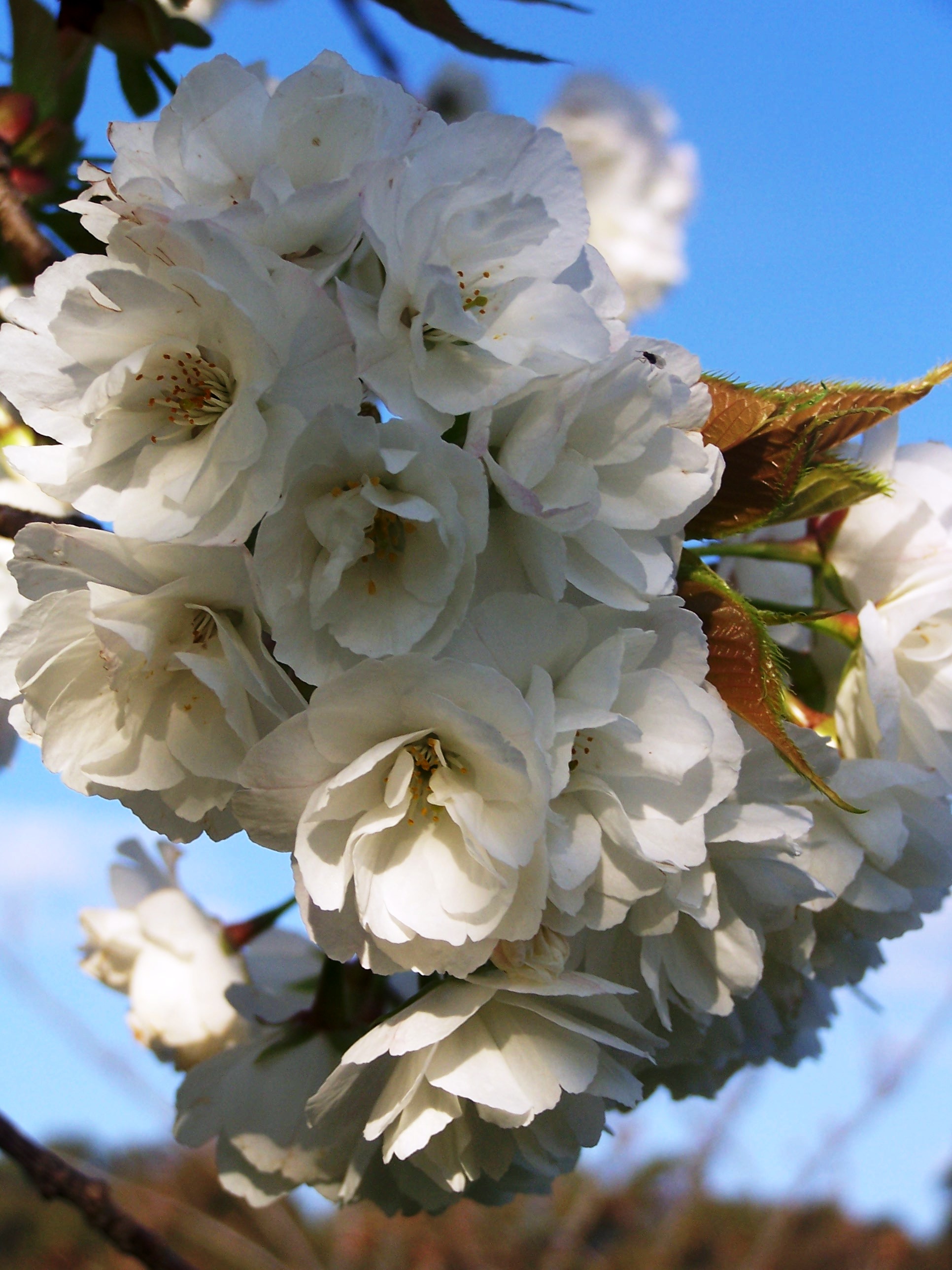
The blossom unfolds

As the change of seasons continues  I find myself contemplating the wonders of nature.  So much can be learned by spending time in nature and really seeing what is happening.  The birds are being industrious and raising their young, seeds are forging their way through the dark soil to emerge into the light, each plant relishes the cleansing rains, the warmth of the sun, whilst all of the insects are busy going about their business.  What has this got to do with Yoga you ask???

Well I am guessing that the birds here are not worrying about what will happen to themselves or their young in a few days, months, years.  The insects are simply following some inbuilt understanding of what it is they are meant to be doing in their life.  The plants are trusting that the light and the rain will be there to cleanse and nurture them.  Unlike us these living things are not obsessed with “getting it right”,  making sure that they prevent any foreseeable or unforeseeable disasters, or living a life that someone or something else dictates.

In yogic terms they are following their Dharma..they have an intrinsic understanding and trust in their own nature,  something that so many of us sadly lack .  Swami Niranjan said that “Dharma does not mean religion but commitment to the process of attaining total fulfillment………it cannot be understood by the intellect, the limited mind. Dharma is an experience which unfolds spontaneously from within as one begins to understand one’s place in relation to the rest of creation and beyond.”

Of course this would lead you to wonder ” can we ever be totally fulfilled?  What is this total fulfillment that he is talking about?” I think the answer to this is yes.  Total fulfillment is achieved when you become truly aware of yourself..who you really are and your deep connection to all things..your heart is filled with compassion and love….you no longer feel the need to judge, criticise, fear. As my very intuitive daughter once told me ..”things just flow mum when you are on the right path”.  Does this mean you no longer have dramas?  Of course not!  Life by its very nature is colored by birth and death..of people, of dreams, of relationships.  Some of those little birds will not survive very long.  Some of the insects will lose their way and some of the plants will thrive whilst others die off..all of this is perfectly right.  It is our perception or judgement about it that can create the dramas.

How does yoga help us on this path?  To begin with the practice of asana allows us the opportunity for self-study—to observe the effects of the asana on the body..not with the aim of perfecting the pose but of understanding and transforming yourself. Yoga asana begins the inner journey.

By meditating we can observe the mind and this also helps with an understanding of ourselves.  We use pranayama or breathing practices to help balance the body and mind. When we  experience the ups and downs of life we can use these tools to ground ourselves to remind oneself that this too will pass just as the spring which has sprung will pass.

Self discovery…exploring our strengths and weaknesses gives the opportunity for self acceptance and once we begin to accept ourselves without guilt, and frustration we can begin to discover the natural role we have to play in life.  Life becomes more about Dharma than drama!

Photo: Asana...;-) :D


For more reading on Dharma:

Yoga Darshan Vision of the Upanishads by Sw Niranjananda Saraswati, Yoga Publications Trust, Munger, Bihar, India 2002

http://www.yogamag.net/archives/1998/esep98/dharma.shtml


Body Stillness

InspirationDuring the last few weeks our meditation class has been working on a practice known as Kaya Sthairyam or body stillness. This practice is considered to be one of the essential elements in establishing  a good meditation practice and this is probably because the first step in learning to meditate is to sit still! (unless of course you are practicing a walking meditation).

So what is involved in Kaya Sthairyam?  It is a practice that focuses the awareness on the body quite intensely so that the mind eventually loses interest in the body and the body becomes quite steady and still.

There are 12 stages in the practice and it is important to develop mastery with each stage before progressing to the next.

Stage 1 is about preparation: finding a comfortable meditation asana and adjusting your position so that the spine is erect and that you  have a solid foundation.

Stage 2 concentrates the awareness on body posture: by observing details of the posture such as alignment, balance , shape, body parts etc.

Stage 3 enables you to visualise the body from different angles …as if looking into a mirror. The aim here is to saturate the mind to the point where it no longer has any interest in the body.

Stage 4 is the visualisation of the body as a tree:  using the mind’s imagination and capacity for visualisation and occupying its creative tendencies.

Stage 5 explores sensations in the body:  these are the factors that are most likely to cause distraction so once again the mind is saturated with these so it will lose interest.

Stage 6 draws attention to the body parts  and moves through them systematically to keep the internalising mind engaged.

Stage 7 focuses on the immobility of the body:  the practitioner resolves to be still.

Stage 8 develops the feelings of steadiness and stillness in the body.

Stage 9 is  the experience of psychic rigidity:  here there is total awareness of the body, its immobility and a sense of being fixed in the position.

Stage 10 is breath awareness:  allowing the breath to become more and more subtle as you focus on the natural breath.

Stage 11 is a state of concentration where the breath becomes very subtle and the mind becomes one pointed and still…a state that enables the practice of dharana or concentration.

Stage 12 is the gradual externalisation that allows the practitioner to move slowly back to the external environment.  This is also a very important part as it allows you to become more grounded and aware of your present environment.

You can try the practice  with Dr Nalini Sahay  This particular variation of Kaya Sthairyam was taught by Paramahamsa Swami Satyananda.

Meditation in the Desert

Having just returned from a 10 day retreat on Meditation in the desert of Northern Territory I can honestly say that it was one of the most challenging things I have done.  Each day was broken up into 45 minute meditation sessions, including walking meditation interspersed with other activities.

DSC_0573

The first thing I found challenging was the environment.  Beautiful as it was in a very raw and earthy way it was also very hot and windy and it was the first time I had needed a fly veil to practice my meditation. (very annoying when the little devils managed to sneak under occasionally and get trapped!!) Needless to say here I had the opportunity to reflect on the importance of creating an environment conducive to meditation and then settling in to “as good as it’s going to get”  It was interesting to watch my ability to develop a “let go” approach to all things beyond my control.  A great start for any meditation practice!

The second challenge was the sheer number of meditation sessions.  I like  to practice meditation in the mornings before breakfast and last thing at night. Now I found myself  doing 5 or more sessions a day and again there was a learning opportunity here.  Why was it that I felt I should be doing something else?  It seems that I had placed a value on meditation only if it fitted in with the rest of my life.  Well of course out there in the desert there really was nothing else I had to be doing but I was somehow conditioned to feel that simply sitting doing “nothing” was idle  of me!!  This took a few days to leave me and once I settled into the pace of the desert I found it much easier.

The final challenge was actually getting sick whilst I was there and wrestling with my ego’s need to be “doing everything”  and my body’s need for time out to rest and recover.  I had to find that compassion for myself….to let go once again!

So whilst I did not wander the desert eating locusts and wild honey I did experience the soul-searching that occurs when you remove yourself from the familiar and your comfort zone.

So what were the benefits you might say??  Well it is a truly wonderful experience to meditate with others.  We had a big group of about 40 people and the positive energy of the group was just marvellous.  I would recommend group meditation to anyone who is thinking about beginning a practice.  You may have even begun some meditation practices in your yoga class.

Another great benefit was having the opportunity to practice walking meditations.  I have done some of these at the Ashram before but have never really integrated them into my practices.  It was exciting to walk in such an ancient land and feel the connection to the earth below whilst carefully focusing on the breath not the scenery and then when we did some whole senses walking I was amazed at just what I could see, hear, smell, feel and even taste (though  I think this was mainly dust!) Opening up to all of your senses gives you the perfect opportunity to be fully present.

Each day we had a teaching session on meditation which built on my previous knowledge and gave me many new insights into ways to approach meditation. More on this in the next post.  So to sum up for now …

  • Meditation is about letting go!
  • Meditation can help you learn more about yourself
  • It is Ok to sit quietly in the moment…you are not being lazy!
  • Maintain that compassion for the self!
  • Meditating with others can be a very enriching experience
  • Vary your meditation practice by including a walking meditation

DSC_0591