Tag Archives: yoga practice

The Koshas

The-Koshas_background-1030x1030[1]

What is the yogic approach to physiology?  The ancient yogis believed that the individual was made up of 5 layers or sheaths of experience and these were called the koshas.   These koshas explain our relationship and experience with the environment, the breath, the mind and higher levels of consciousness.  They provide a way for us to find our way into the subtler layers of our being.

The first layer or kosha which we are most likely to be aware of is one called annamaya kosha  or the body sheath.  It occupies about 75% of our awareness.  This is our relationship with the body, the bones, muscles, ligaments, organs  and how we interact in our environment through the senses of sight, touch, taste, smell and feel.   It concerns the foods we eat, the things we do, our sleeping habits, the media we expose ourselves to, the people in our lives and places we visit.   You may notice that some people or places make you feel content, happy and positive whereas others make you feel anxious, exhausted, fearful.  Similarly you may find that when you get regular sleep and take regular meal breaks with healthy food choices you generally feel better.  The same goes for exercise be it yoga or some other form of physical activity.

Once we become conscious of these things we are able to use yoga to create a steady experience of annamaya kosha.   Some things to consider may be setting a regular time for going to bed,  making changes to our eating habits in terms of what you eat and when( you could even use Ayurvedic principles here).  Making conscious choices about the people we spend time with, not just putting up with it.   Establishing a regular yoga practice and taking time for stillness in meditation.   Creating balance in annamaya Kosha creates a ripple effect to the higher koshas or layers affecting energy levels and or mental balance.

Yoga practices for harmonising the physical body include:

  • asana by toning and strengthening the body,
  •  pranayama (breathing practices)  by increasing breath capacity, physical energy and balancing the cerebral hemispheres
  • meditation and yoga nidra to provide stress relief and balance the fight/flight response
  • cleansing practices like neti, kunjal  to keep mucus membranes and tracts lubricated and healthy

Some of the principles in the management of Annamaya kosha include:

  • regularity of sleep, meals, yoga practice
  • simplicity of food, daily routine
  • moderation – not overdoing any addictive behaviours
  • discipline – not rigid or suppressed but in developing the ability to control the mind
  • awareness i.e.. consciously listening to the body’s needs
  • tapas or sacrifice ..opportunity for fasting
  • cleanliness
  • flexibility
  • adaptability


Learning to let go

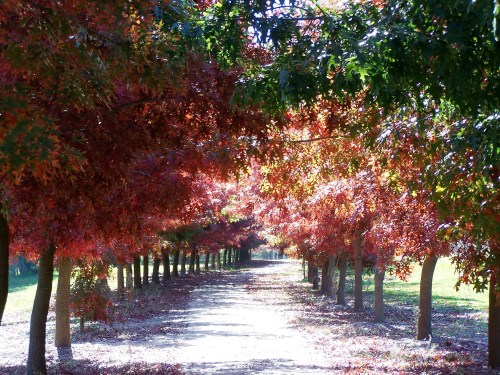
Autumn is such a lovely time of the year.  I always marvel at the beautiful display that nature puts on before she decides to have a rest over the winter and watching autumn leaves fall is such a peaceful pastime. Recently I was thinking about how clever nature is to cast off that which is no longer needed  and was reminded of the value in doing just that ourselves!

autumn2 022

How often do we get stuck repeating the same old patterns and habits that we know do not really serve us anymore? These old patterns or conditionings are known as samskaras to the yogis.  They are based on past experiences and if left continue to influence the way we function in this world.  Perhaps you find yourself always apologising for your behaviour?  Putting others needs before your own? Not taking time out for yourself,  feeling that you somehow do not measure up or need to work harder, faster, to feel good about yourself??

There may be some things that really push your buttons; people who don’t appreciate you,  people who think differently or treat you in a particular way.   At some stage we all need to ask “is my behaviour and response helping me to grow?”  If this is not the case then perhaps it is time to let some of this stuff go.  Just like the deciduous trees around us it can be healthy and a great relief to just drop it!!

How can yoga help us to do that?

To begin with true yoga requires you to be fully present.  This is something that develops with time and practice.  You make a conscious effort to keep the mind with the practices by following the breath, counting rounds and focusing on different parts of the body as you move into postures or asanas as they are called.

By becoming fully present you begin to notice the mind and how quickly it jumps from one thing to another …how easy it is to be distracted by thoughts.  Some of these thoughts are quite repetitive and they generally have no basis in truth but are based on some past experience where you felt a certain way or reacted to something.  To watch without getting caught up is the secret because this allows us to detach from all the emotional baggage around the thought.

By using particular breathing practices you can balance the breath and learn to control our breathing when we are anxious and stressed by events around us or things that people say.  This creates the space necessary for you to take that step back to “see” your usual reaction or response and decide consciously if this is what you want to say or do.

The practice of yoga nidra (see post from Jan 2012) allows the time and space for physical rest but also offers the opportunity for the samskaras to become apparent and be released.  Particularly when the teacher is using opposites and visualisations as these may invoke feelings and memories that you learn to watch in a relaxed and detached state and they begin to lose their power in your waking state. In yoga nidra you set an intention for your life.   A short positive statement about something you are working toward (a sankalpa) when you are in the deeply relaxed state that yoga nidra brings about  can guide your actions and thoughts in your waking state.

Letting go is not instantaneous  but the benefits of practising the art of “just dropping it” are so worthwhile.  You are no longer reacting to things but choosing how you wish to respond.  It does not matter how many times you need to practise..it is the fact that you do which will make the difference.  So take some inspiration from the deciduous trees and stock up your yoga toolbox..it will change your life.


Building a foundation

DSC_0125As we move into the season of Autumn it could be a great opportunity to look at what is truly important in your life. It can be a busy time over the summer with friends, relatives, holidays, work and getting children back to school.  It is at times like this when our yoga practice can suffer as we get caught up in all the “doing” of life, but one thing is for sure if you have built a  strong foundation in your yoga practice then it will support you as you navigate your way around the “busy-ness” of life.

How do you build a strong foundation?  One of  the most important features of yoga is its ability to keep you grounded.  When all around you seems to be flying off in many directions…taking  time to be still and focusing on the breath is the perfect way to ground yourself.  The many pranayama or breathing techniques taught in yoga provide tools to help (literally)  keep your cool ( try Sheetali or Sheetkari breathing) and focused on the here and now.

Asana practice too will provide you the opportunity to be in your body…. to feel the parts that feel good, the parts that need more TLC, the parts you worry are not quite right and the parts you love (yes loving your body is part of a solid foundation!!).  As you move through a small sequence of postures listen to the messages from your physical body, not the chatter in your head and allow your body to move with the breath.  No matter what state you are in when you move to your yoga mat it is as if all the other stuff dissolves  (sometimes it takes a little longer but it will happen) …

Developing your own meditation practice is also the basis of a strong foundation in yoga.  There are many different meditation techniques and it is worth exploring different ones to find what suits you.  If you find sitting still difficult try a walking meditation.  You don’t have to meditate for very long for meditation to be effective.  Again it is the practice of often being present …of allowing yourself to simply be.  Some people find the regular activity of simply lighting a candle and some incense or exploring nature as way to stop the clock for a brief moment.

All of these practices contribute to what we call a sadhana.  A sadhana  is a regular spiritual practice that helps you to find balance in your life by giving you the opportunity to turn inward.  It is not a religious “thing” ( you may or may not have a connection to some higher God and you could incorporate this)  but it is an attempt to connect with the bigger picture…nature, your place on this earth, the bigger YOU.

Having a sadhana means you are making a commitment to yourself.  It requires discipline (even if it only 10 mins a day) so cultivates this.  It allows you to grow as a person affecting your relationship with yourself and others. A sadhana  provides an opportunity for self reflection…to look at the patterning of the mind, to see your thoughts as they come and go…to discover that your thoughts are not you.  And of course it builds a foundation…just like your sankalpa ( see post from Jan 2012) .  A strong platform from which you can make decisions about your life, your work, your health, your relationships with others.  This foundation is strengthened by the repetition and regularity with which your sadhana is performed.  No matter how small you start, by developing this regular practice you will slowly notice a shift in the constant demands of the mind…you will not feel so swayed by the fluctuations of mind and emotions and find yourself more accepting of yourself and life ups and downs.

So how do you go about this?  First of all find a space that you feel comfortable in – a part of your room,  a separate room, somewhere outside.  Decide how long you wish to practice each day and what your sadhana components will be.  Remember this can be as small as lighting a candle and sitting quietly for a few moments.  It may include asana practice, breathing practices, chanting, singing, meditation, walking in nature…choose what you know makes you feel good.  It does not have to be a long session…it is the regularity that provides the benefit not the length of practice.

I find practising my sadhana first thing in the morning the best for me..it allows me not to get caught up in the day and make excuses for missing it and I always find mornings more peaceful (mind you I am well past the age of having little ones awake before me and making their own special demands on my time!!) so if mornings don’t suit find a time that does and make it your time.

May you find time to be you.


International Yoga Day

international-yoga-day-logo-300x429

June 21st was declared International Day of Yoga  by the United Nations  last year after India’s Prime Minister Narendra Modi urged the UN to acknowledge the valuable gift of India’s ancient tradition…the gift of yoga.  Thousands of people around the world rolled out their yoga mats in parks, streets, shopping malls, yoga studios and on beaches as yoga enthusiasts sought  to share this wonderful gift.

In my small community we were able to share a beautiful winter’s morning bathed in sunlight at the local park.   It was such a joy to see so many people coming together to not only practice their yoga but to acknowledge the benefits that yoga has brought to their life.  Later that day  I sat down to reflect on just what those benefits that I had experienced were…..

Of course the obvious is an increase in my flexibility and strength which  is probably the primary reason why many people join a yoga class. Then  I thought about the more subtle changes in my life.  The fact that I was often “noticing my breath” , observing how my breathing changed with the different situations I found myself in.  By practicing the pranayama in class I had become attuned to the relationship between breath, activity and  most importantly emotions.  I had learned ways to control my breath and use this to alter what was happening in my body and mind.

I have also found it easier to relax.  The techniques I have learned mean that it is quite easy to develop stillness in my body by either sitting or lying down.  It is as if my body now has a cellular memory for being relaxed  as soon as I get into a comfortable sitting (padmasana)  or lying pose ( shavasana). My body wants to become still and as my body stills, my mind seems to follow suit.  Of course this does not mean that I never experience tension in the body and mind but it is as if I have found an “escape button” when things seem overwhelming.

By practicing yoga I have become more attuned to myself and subsequently more attuned to others and the world around me. I see flocks of birds wheeling in the sky in perfect formation sparkling like bits of tinsel; I see small shoots bursting forth defiantly from frozen ground, lambs playing “tiggy” as they dash around the paddock, with all four legs leaping off the ground.  I see sadness or joy  in the face of strangers.  I see hope and triumph in the faces of children as they learn to master new skills.  I hear the rain, the wind, the silence ….the songs of nature. I smell the freshness of the country air, the sweet scent of lemon gums, the rich soil beneath my feet.  My world has become so much more three-dimensional.

Yoga has also taught me about discipline.  The need to set aside time for myself for physical movement not associated with work, for relaxation, for fun, for reflection.  I am continually developing the ability to simply “be” not “do” and it is wonderfully liberating.

Yoga has given me the opportunity to share  all of these benefits with others by teaching.  There is nothing more rewarding for a teacher than to see the joy of discovery on his/her student’s faces..that “ah ha I get it” moment and in my many years of teaching, especially in my yoga teaching, this has been nothing short of pure joy.

When you first set foot tentatively on a yoga mat, hoping this might ease a bit of stiffness in the body,  you could not imagine how profoundly it will change your life.  So thank  you President Modi and members of the UN, thank you to all those students who came to join me in the park and thank you to the ancient yogis for sharing this beautiful gift.

http://www.ndtv.com/cheat-sheet/pm-narendra-modi-launches-international-yoga-day-celebrations-773715?site=full

Quote

Sideways stretching

In all of my classes I try to include some sideways stretching of the body.  In our normal everyday activities the muscles on the sides of the body do not get a lot of stretching and strengthening  yet they are very important in maintaining good posture.

The muscles we are talking about here in particular are the obliques, serratus anterior and the lattisimus dorsi.  Twisting practices are excellent for stretching these muscles as are practices which require you to lengthen each side of the body whilst contracting the muscles in the opposite side.  A great practice to awaken and work with these muscles is Tiriyaka Tadasana  or swaying palm tree pose.  In this standing posture the hips remain facing the front whilst the torso  moves from side to side with arms above the head.

It is important to make sure that the body does not lean forward or back whilst practising.   I like to visualise the body between two panes of glass…unable to move forward or back only side to side.

“The tendency in bending sideways is always to twist the pelvis or the         shoulders. We can help prevent this by flattening the lower back and tucking         the tailbone under before doing postures like Trikonasana variation 3         (triangle sliding the hand down the side of the leg).

101_7876

Another way to fix  the pelvis so that it cannot rotate is either by squatting against the  wall, or by beginning in Shashankasana (child pose) and bending to the  side.”  (Swami Bhaktipoornananda Saraswati 2000 Yoga Magazine)


101_7866

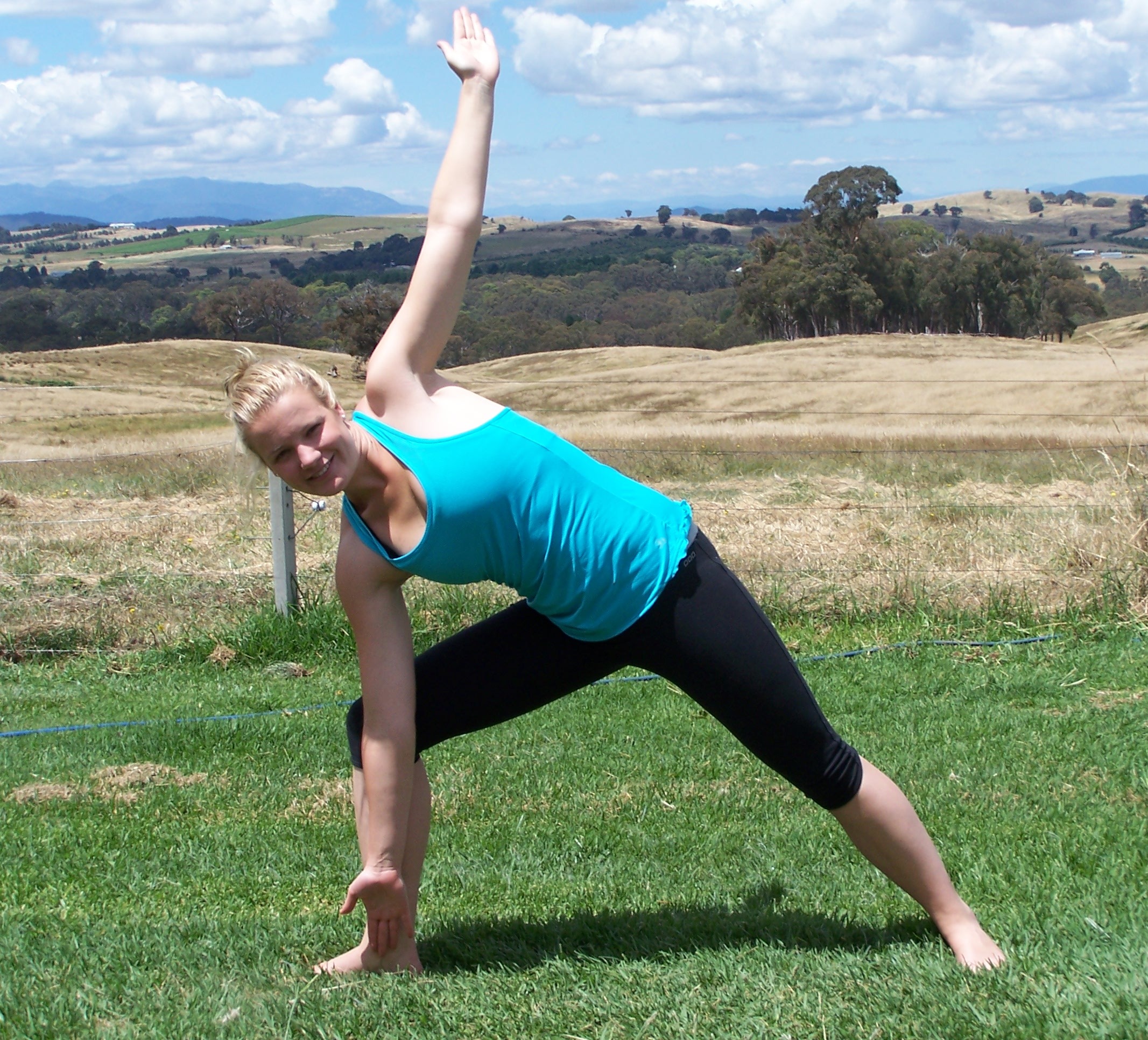
Stronger sideways stretching is achieved in Trikonasana or triangle pose.

In Trikonasana the aim is to eventually straighten the legs whilst leaning to the side and taking the hand to the foot…however for most people this is not achieved without leaning forward which diminishes the effect of the sideways stretch.  Initially you should practice with the knee bent and only take the hand as far as it will comfortably go whilst keeping the pelvis fixed.  Again a  good way to practice this is by practicing against a wall …you will soon discover if you are leaning forward!

Aside from stretching the muscles in the sides of the body Trikonasana strengthens the legs , knees, ankles arms and chest and helps open the hips groin and hamstrings.  There is also a benefit to  internal organs with the gentle massage of the digestive system that occurs.


Yamas and Niyamas

fresh and newWe are almost to the end of another year and many of us are reflecting on the year that was…..What we achieved, what we failed at, how we have changed and in what ways that we  grew ?  So how do we live our best life and what part does yoga play in this?

Perhaps we can look back to the writings of one of the forefathers of yoga Patanjali for guidance here…in his sutras Patanjali suggests that you should follow the eight limbs of yoga.  These eight limbs make up what is known as Raja yoga or (royal yoga).  The eight limbs include Yamas, Niyamas, Asana Pranayama, Pratyahara, Dharana, Dhyana and Samhadhi.

As yoga practitioners we are familiar with the terms, Asana, Pranayama and perhaps even Pratyahara (withdrawal of the senses) but that is only a small part of the system of Raja yoga.  It is interesting to note that Patanjali places Yamas and Niyamas ahead of Asana and Pranayama.  So what are we talking about here and how can  this have any bearing on living our “best life”?

Yamas are guidelines for how we relate to others  — the yoga aspirant becomes aware of others and makes greater demands/disciplines on themselves.  These yamas include satya (truthfulness), ahimsa (non violence), asteya (honesty), aparigraha (non-possessiveness) and brahmacharya (celibacy or non gratification at the expense of others on any level).

Satya here refers not only simply speaking truth but to an awareness of what is correct, right and true as it is manifesting from within and the ability to express it.  Ahimsa or non violence is not just an external act of eliminating violence from our actions but the absence of the violent nature in our personality… with regard to our interactions with others but also ourselves.  Asteya relates to finding the honesty, simplicity and sincerity of our true nature.

Aparigraha or non possessiveness is concerned with non attachment.  When we become attached to people, things, experiences we can become possessive, driven by the ego and selfishness.  This non attachment does not mean not caring but it should not be associated with selfishness and your own desires.  Finally Brahmacharya has often been seen as celibacy but in fact the word literally means higher consciousness …Brahma ( higher reality) and acharya (one who is established in ) and of course one established in higher reality is not stuck in the sensorial realm merely wanting to gratify sensual needs.

The Niyamas are guidelines relating to the self — you understand the self better and become more accepting whilst still working to create a sense of discipline in your  inner life.  The niyamas include shaucha (cleanliness), santosha (contentment), tapas (austerity), swadhyaya (self-study) and ishwara pranidhana (generation of faith).

Here shaucha or cleanliness refers to cleanliness of the body, the mind and the environment.  Santosha  refers to finding happiness with whatever one has and enjoying living in the present moment rather than craving more.  Tapas or austerity means following a process of change or transformation for the better which may involve some sacrifice. (perhaps getting out of bed earlier for your yoga practice!)

Swadhyaya or self-study is becoming aware of our strengths, weaknesses and the individual qualities that make up our personalities…..observing your reactions and actions in the many different situations of life. Ishwara pranidhana is the cultivation of faith in an unmanifest reality which may take on any form but in itself has no name or form or attribute.

So perhaps as you reflect on the year that was you might consider some of the Yamas and Niyamas in your life.  As we move into 2015 you may even  wish to take one of these each month and work on it , meditate on it and find ways to incorporate these ancient teachings to help you create your best life.

Om Shanti and Happy New Year !

Swami Satyananda's Garden in Rikhia

What shapes your life- drama or Dharma?

And the blossom unfolds

The blossom unfolds

As the change of seasons continues  I find myself contemplating the wonders of nature.  So much can be learned by spending time in nature and really seeing what is happening.  The birds are being industrious and raising their young, seeds are forging their way through the dark soil to emerge into the light, each plant relishes the cleansing rains, the warmth of the sun, whilst all of the insects are busy going about their business.  What has this got to do with Yoga you ask???

Well I am guessing that the birds here are not worrying about what will happen to themselves or their young in a few days, months, years.  The insects are simply following some inbuilt understanding of what it is they are meant to be doing in their life.  The plants are trusting that the light and the rain will be there to cleanse and nurture them.  Unlike us these living things are not obsessed with “getting it right”,  making sure that they prevent any foreseeable or unforeseeable disasters, or living a life that someone or something else dictates.

In yogic terms they are following their Dharma..they have an intrinsic understanding and trust in their own nature,  something that so many of us sadly lack .  Swami Niranjan said that “Dharma does not mean religion but commitment to the process of attaining total fulfillment………it cannot be understood by the intellect, the limited mind. Dharma is an experience which unfolds spontaneously from within as one begins to understand one’s place in relation to the rest of creation and beyond.”

Of course this would lead you to wonder ” can we ever be totally fulfilled?  What is this total fulfillment that he is talking about?” I think the answer to this is yes.  Total fulfillment is achieved when you become truly aware of yourself..who you really are and your deep connection to all things..your heart is filled with compassion and love….you no longer feel the need to judge, criticise, fear. As my very intuitive daughter once told me ..”things just flow mum when you are on the right path”.  Does this mean you no longer have dramas?  Of course not!  Life by its very nature is colored by birth and death..of people, of dreams, of relationships.  Some of those little birds will not survive very long.  Some of the insects will lose their way and some of the plants will thrive whilst others die off..all of this is perfectly right.  It is our perception or judgement about it that can create the dramas.

How does yoga help us on this path?  To begin with the practice of asana allows us the opportunity for self-study—to observe the effects of the asana on the body..not with the aim of perfecting the pose but of understanding and transforming yourself. Yoga asana begins the inner journey.

By meditating we can observe the mind and this also helps with an understanding of ourselves.  We use pranayama or breathing practices to help balance the body and mind. When we  experience the ups and downs of life we can use these tools to ground ourselves to remind oneself that this too will pass just as the spring which has sprung will pass.

Self discovery…exploring our strengths and weaknesses gives the opportunity for self acceptance and once we begin to accept ourselves without guilt, and frustration we can begin to discover the natural role we have to play in life.  Life becomes more about Dharma than drama!

Photo: Asana...;-) :D


For more reading on Dharma:

Yoga Darshan Vision of the Upanishads by Sw Niranjananda Saraswati, Yoga Publications Trust, Munger, Bihar, India 2002

http://www.yogamag.net/archives/1998/esep98/dharma.shtml


Is your energy feeling a little low?

There is a selection of asanas concerned with improving the energy flow in the body and breaking down neuro-muscular knots.  This group is called the Shakti Bhanda asanas.  The word shakti  in sanskrit means energy and the word bhanda is a sanskrit word for holding or locking so  the shakti bhanda series of asanas is concerned with releasing the energy blocks within the body, mainly in the pelvic region, the spine and the chest.

These asanas are  particularly helpful for those whose energy is feeling low and needs a boost.  In winter you may find that long periods indoors, lack of sunlight and reduced exercise routines can lead to a reduction in your energy levels so this is a good time to explore the practices of  the Shakti bhanda group.

According to the APMB* these asanas clear the energy blockages, activate the heart and lungs and improve endocrine function.  They are  especially helpful for menstrual problems and can be used before and after pregnancy.

Some of the practices like Chakki Chalanasana (churning the mill) are excellent for toning the nerves and organs of the pelvis and abdomen whilst Namaskarasana (salutation pose) has a positive effect on the nerves and muscles of the thighs, knees, shoulders, arms and neck.  As this posture is practiced in a squatting position it also helps to increase the flexibility of the hips.

Kashtha Takshanasana (wood chopping pose)….. a favorite of mine, which can be performed squatting or standing  helps to open the hips and works the muscles of the back between the shoulder blades as well as the shoulders and the upper back muscles.

It is also useful to raise the prana shakti during times of lethargy by focusing on different types of breathing practices such as Bhastrika or the bellows breath.

This breathing practice where you focus on taking short sharp inhalations and exhalations through the nose generating  a pumping action in the abdomen, whilst the chest, shoulders and face remain relaxed, burns up toxins  and charges the pranic system, creating alertness, heat and arousing  body and mind.  The rapid exchange of air in the lungs increases the exchange of oxygen and carbon dioxide into and out of  the bloodstream., stimulating the metabolic rate and producing heat, flushing out wastes and toxins.  The practice of Bhastrika, however  is contraindicated for people with high blood pressure, heart disease, hernia, gastric ulcer, stroke, epilepsy and retinal problems.  Generally speaking    you should seek guidance from a teacher before commencing bhastrika as it is a strong practice and needs to be done correctly to be effective.

Of course another way to keep warm this winter and beat that winter sluggishness that often strikes about the middle of winter is to reconnect to your practice of Salute to the sun or Surya Namaskara.  The dynamic movement of this practice and the added visualisation of drawing within the qualities of the sun such as  vitality, light, warmth and life force have a profound effect on all levels.

for more information on shakti check out …http://www.yogamag.net/archives/1980/emay80/sechealth.shtml

* APMB or Asana, Pranayama,Mudra ,Bhanda by Sw Satyananda Saraswati Yoga Publications Trust, Munger , Bihar, India


Changing seasons, changing direction

Having just returned home from a wonderful yoga retreat in Bali with One World Retreats I have found myself looking out at the most glorious autumn color here in Beechworth.

autumn

The retreat in itself was a great opportunity to stop, reflect, challenge myself and meet new friends but returning home has reminded me that with the changing of each season we also get the opportunity to stop, reflect and challenge ourselves…you may even meet new friends ..people who will help you on your journey of inner discovery.

As the trees prepare for winter by shedding their leaves so too can we prepare for the next stage in our lives by looking at what is no longer serving us and letting it go.

We had a lovely ceremony in Bali where during the week each person was asked to write down on small bits of paper what we would like to let go of and at the end of the week we gathered together to burn these unnecessary thoughts or behaviors and send them off down the river with a colorful spray of flowers.  It was very moving for all and I somehow suspected that much of what we had written down would be the same! Bali retreat

We often find ourselves plagued with doubts, fears and negative thoughts,  all of which do nothing to serve our higher purpose but these patterns of thinking can be very hard to let go of as they are quite entrenched. The old saying that what you practice you get good at comes to mind here!!

So here is the challenging part!  To look closely at ourselves…not with anger and judgement but simply to observe the way we think and behave.  The practice of silence or mauna is a wonderful way to do just this.    Learning to be silent is a practice of pratyahara or withdrawal of the senses.  According to Swami Sivananda the practice of mauna develops will power.  It checks the impulse of speech and is a great help in the observance of truth.   Spend some time each day not interacting just watching and notice what is going on…you may be surprised! You may notice thoughts and patterns that you want to let go of and just like the autumn trees you can choose to release them.  You may even like to create a small ceremony for yourself ..using the autumn leaves.  It is up to you.

I know that it is not easy to let go and it may be that this becomes a regular practice of yours but then again the changing of the seasons is a regular practice too!


Body Stillness

InspirationDuring the last few weeks our meditation class has been working on a practice known as Kaya Sthairyam or body stillness. This practice is considered to be one of the essential elements in establishing  a good meditation practice and this is probably because the first step in learning to meditate is to sit still! (unless of course you are practicing a walking meditation).

So what is involved in Kaya Sthairyam?  It is a practice that focuses the awareness on the body quite intensely so that the mind eventually loses interest in the body and the body becomes quite steady and still.

There are 12 stages in the practice and it is important to develop mastery with each stage before progressing to the next.

Stage 1 is about preparation: finding a comfortable meditation asana and adjusting your position so that the spine is erect and that you  have a solid foundation.

Stage 2 concentrates the awareness on body posture: by observing details of the posture such as alignment, balance , shape, body parts etc.

Stage 3 enables you to visualise the body from different angles …as if looking into a mirror. The aim here is to saturate the mind to the point where it no longer has any interest in the body.

Stage 4 is the visualisation of the body as a tree:  using the mind’s imagination and capacity for visualisation and occupying its creative tendencies.

Stage 5 explores sensations in the body:  these are the factors that are most likely to cause distraction so once again the mind is saturated with these so it will lose interest.

Stage 6 draws attention to the body parts  and moves through them systematically to keep the internalising mind engaged.

Stage 7 focuses on the immobility of the body:  the practitioner resolves to be still.

Stage 8 develops the feelings of steadiness and stillness in the body.

Stage 9 is  the experience of psychic rigidity:  here there is total awareness of the body, its immobility and a sense of being fixed in the position.

Stage 10 is breath awareness:  allowing the breath to become more and more subtle as you focus on the natural breath.

Stage 11 is a state of concentration where the breath becomes very subtle and the mind becomes one pointed and still…a state that enables the practice of dharana or concentration.

Stage 12 is the gradual externalisation that allows the practitioner to move slowly back to the external environment.  This is also a very important part as it allows you to become more grounded and aware of your present environment.

You can try the practice  with Dr Nalini Sahay  This particular variation of Kaya Sthairyam was taught by Paramahamsa Swami Satyananda.