Tag Archives: deeping practice

Autumn musings

The colours are looking beautiful here in Beechworth at the moment as we head into term 2 of yoga classes. I think of this term as a time of settling in to the cooler mornings, the evenings getting darker and preparing us for the winter months ahead. It is a time of reflection and also a time to rest after the heat and busyness of the warmer weather and long evenings.

Yoga is often more about the rest between practices and poses than the poses themselves. It gives us time to observe any changes in the physical body, our thoughts and/or our emotions. There is the chance to deepen your awareness of the effects of practices.

We all come to yoga to stretch, to relieve tension, to relax and perhaps heal in some ways both on a physical and emotional level so these rest times are a very important part of the process. It is not simply a matter of banging through a number of poses, a few breathing exercises and a relaxation practice. It is about developing that inner awareness of what each practice can reveal.

Often the reveal might simply be “gee my right shoulder has been really tight lately” or it may be something along the lines of “every time I focus on my breathing I feel a lot calmer” or even something deeper like “those hip opening postures made me want to cry today”. Each time we can pause to reflect or allow the practice to do its work we discover a little more about our bodies and ourselves. As we know yoga is not just about the shape and state of your body but also about the shape and state of your life.

We often hold a lot of tension in the hips and hip opening poses like pigeon pose or gecko pose help to release that tension. Similarly shoulder opening through shoulder circles, threading the needle and the double angle pose can release the tightness that comes from feeling you are carrying a load on your shoulders.

I love those little pauses in shashankasana (pose of the child), parvartasana ( mountain pose or you may know this as downward dog) and simply resting in shavasana (corpse pose) and I hope you can enjoy them too. Perhaps this is really the slow yoga ..the tasting bits and noticing what is happening. I always like to finish my classes with the students pausing for a brief moment to reflect on any changes in how they are feeling physically mentally and emotionally. Not in a judgmental way but in a curious way.

Let me know what you think about those pauses and what you notice after your yoga class. I look forward to seeing some of you on the mat next week.

Taking time out

When was the last time you actually did nothing ? Not reading, working, gardening, sleeping, cooking etc just literally sat down and did no thing which is what doing nothing is all about.

Our bodies and minds need time out from the frantic pace of life and yet there is often a guilty feeling associated with just sitting down doing nothing. I know there are many things that we do for relaxation such as reading, arts etc but this still requires us to to engage with some action whereas doing nothing asks no more that to be. Be present with your body as it is and the breath. It can be challenging. We fidget, notice the mind swirling with thoughts and start planning our next activity etc but it is worth persevering with the practice and noticing the discomfort that arises. After a while the process becomes easier and you will find yourself feeling a lot more rested and refreshed than if you had been relaxing with a book or watching an interesting show.

The first step is in stilling the body and allowing yourself to be exactly where you are. Noticing where you are and how you are sitting. The next step is to become aware of your breathing. Examining the depth, speed, temperature etc of your natural breath. Then you can employ either a count of the breath or a simple mantra to keep the mind from wandering as you watch your breath. You only need to practice for short time 5 or 10 mins. Try practising this a few times a week and see how it works for you. I would be interested in your feedback.

Here is a little guided session to get you started.

Om Shanti

Navaratri

Well we are in the middle of the 9 nights of the Devis called Navaratri . A celebration of the inner Devis, Durgha , Lakshmi, and Saraswati and the mother Devine.

Understanding the importance and meaning within this celebration connects you to the wonderful rejuvenating cycles of nature. This in turn is intricately linked to our own biological rhythms and energies. In Navaratri you can draw on the auspicious energies of the time to affect your own life.

Durgha is the goddess of protection and the one who can help to free us from the forces that keep pulling our energy or Shakti down such as negativity, jealousy, greed, illness and the waywardness of ego.

We can ask Durgha for protection from these forces when we light a candle to her,chant the Durgha mantras 108 times, or participate in a havan or fire ceremony for the first 3 days.

Lakshmi is the goddess of abundance where we can seek more of what we what we need in our lives, eg patience, love, compassion, health , energy to name a few. There are 3 days of celebration of Lakshmi and again you can participate in various ways, chanting , candle lighting , setting up a special puja table with flowers, incense etc or joining in the havan at your local ashram or even on line in some cases.

After these 6 days we honour Saraswati for 3 days. It is believed that Saraswati endows human beings with the powers of speech, wisdom and learning. During these 3 days the focus is on the growth of the individual by the blessings of Saraswati. We can connect with the wisdom mind or higher mind, learning more about the illusion of Maya and speaking our truth or Satya.

You might like to think about these 3 goddesses during the remaining 5 days and nights and connect to them in your own way.

Durgha Photo by Souvik laha on Pexels.com

Learning to let go

Autumn is such a lovely time of the year.  I always marvel at the beautiful display that nature puts on before she decides to have a rest over the winter and watching autumn leaves fall is such a peaceful pastime. Recently I was thinking about how clever nature is to cast off that which is no longer needed  and was reminded of the value in doing just that ourselves!

autumn2 022

How often do we get stuck repeating the same old patterns and habits that we know do not really serve us anymore? These old patterns or conditionings are known as samskaras to the yogis.  They are based on past experiences and if left continue to influence the way we function in this world.  Perhaps you find yourself always apologising for your behaviour?  Putting others needs before your own? Not taking time out for yourself,  feeling that you somehow do not measure up or need to work harder, faster, to feel good about yourself??

There may be some things that really push your buttons; people who don’t appreciate you,  people who think differently or treat you in a particular way.   At some stage we all need to ask “is my behaviour and response helping me to grow?”  If this is not the case then perhaps it is time to let some of this stuff go.  Just like the deciduous trees around us it can be healthy and a great relief to just drop it!!

How can yoga help us to do that?

To begin with true yoga requires you to be fully present.  This is something that develops with time and practice.  You make a conscious effort to keep the mind with the practices by following the breath, counting rounds and focusing on different parts of the body as you move into postures or asanas as they are called.

By becoming fully present you begin to notice the mind and how quickly it jumps from one thing to another …how easy it is to be distracted by thoughts.  Some of these thoughts are quite repetitive and they generally have no basis in truth but are based on some past experience where you felt a certain way or reacted to something.  To watch without getting caught up is the secret because this allows us to detach from all the emotional baggage around the thought.

By using particular breathing practices you can balance the breath and learn to control our breathing when we are anxious and stressed by events around us or things that people say.  This creates the space necessary for you to take that step back to “see” your usual reaction or response and decide consciously if this is what you want to say or do.

The practice of yoga nidra (see post from Jan 2012) allows the time and space for physical rest but also offers the opportunity for the samskaras to become apparent and be released.  Particularly when the teacher is using opposites and visualisations as these may invoke feelings and memories that you learn to watch in a relaxed and detached state and they begin to lose their power in your waking state. In yoga nidra you set an intention for your life.   A short positive statement about something you are working toward (a sankalpa) when you are in the deeply relaxed state that yoga nidra brings about  can guide your actions and thoughts in your waking state.

Letting go is not instantaneous  but the benefits of practising the art of “just dropping it” are so worthwhile.  You are no longer reacting to things but choosing how you wish to respond.  It does not matter how many times you need to practise..it is the fact that you do which will make the difference.  So take some inspiration from the deciduous trees and stock up your yoga toolbox..it will change your life.


Building a foundation

DSC_0125As we move into the season of Autumn it could be a great opportunity to look at what is truly important in your life. It can be a busy time over the summer with friends, relatives, holidays, work and getting children back to school.  It is at times like this when our yoga practice can suffer as we get caught up in all the “doing” of life, but one thing is for sure if you have built a  strong foundation in your yoga practice then it will support you as you navigate your way around the “busy-ness” of life.
How do you build a strong foundation?  One of  the most important features of yoga is its ability to keep you grounded.  When all around you seems to be flying off in many directions…taking  time to be still and focusing on the breath is the perfect way to ground yourself.  The many pranayama or breathing techniques taught in yoga provide tools to help (literally)  keep your cool ( try Sheetali or Sheetkari breathing) and focused on the here and now.

Asana practice too will provide you the opportunity to be in your body…. to feel the parts that feel good, the parts that need more TLC, the parts you worry are not quite right and the parts you love (yes loving your body is part of a solid foundation!!).  As you move through a small sequence of postures listen to the messages from your physical body, not the chatter in your head and allow your body to move with the breath.  No matter what state you are in when you move to your yoga mat it is as if all the other stuff dissolves  (sometimes it takes a little longer but it will happen) …

Developing your own meditation practice is also the basis of a strong foundation in yoga.  There are many different meditation techniques and it is worth exploring different ones to find what suits you.  If you find sitting still difficult try a walking meditation.  You don’t have to meditate for very long for meditation to be effective.  Again it is the practice of often being present …of allowing yourself to simply be.  Some people find the regular activity of simply lighting a candle and some incense or exploring nature as way to stop the clock for a brief moment.

All of these practices contribute to what we call a sadhana.  A sadhana  is a regular spiritual practice that helps you to find balance in your life by giving you the opportunity to turn inward.  It is not a religious “thing” ( you may or may not have a connection to some higher God and you could incorporate this)  but it is an attempt to connect with the bigger picture…nature, your place on this earth, the bigger YOU.

Having a sadhana means you are making a commitment to yourself.  It requires discipline (even if it only 10 mins a day) so cultivates this.  It allows you to grow as a person affecting your relationship with yourself and others. A sadhana  provides an opportunity for self reflection…to look at the patterning of the mind, to see your thoughts as they come and go…to discover that your thoughts are not you.  And of course it builds a foundation…just like your sankalpa ( see post from Jan 2012) .  A strong platform from which you can make decisions about your life, your work, your health, your relationships with others.  This foundation is strengthened by the repetition and regularity with which your sadhana is performed.  No matter how small you start, by developing this regular practice you will slowly notice a shift in the constant demands of the mind…you will not feel so swayed by the fluctuations of mind and emotions and find yourself more accepting of yourself and life ups and downs.

So how do you go about this?  First of all find a space that you feel comfortable in – a part of your room,  a separate room, somewhere outside.  Decide how long you wish to practice each day and what your sadhana components will be.  Remember this can be as small as lighting a candle and sitting quietly for a few moments.  It may include asana practice, breathing practices, chanting, singing, meditation, walking in nature…choose what you know makes you feel good.  It does not have to be a long session…it is the regularity that provides the benefit not the length of practice.

I find practising my sadhana first thing in the morning the best for me..it allows me not to get caught up in the day and make excuses for missing it and I always find mornings more peaceful (mind you I am well past the age of having little ones awake before me and making their own special demands on my time!!) so if mornings don’t suit find a time that does and make it your time.

May you find time to be you.


A day in silence

Having just returned from  a wonderful yoga retreat in Ubud Bali I would like to share some of my experience of the the beauty of a day of silence.  What better place to explore the joy and peace of silence than in lush tropical jungle surrounded by timeless rice paddies.

DSC_1218

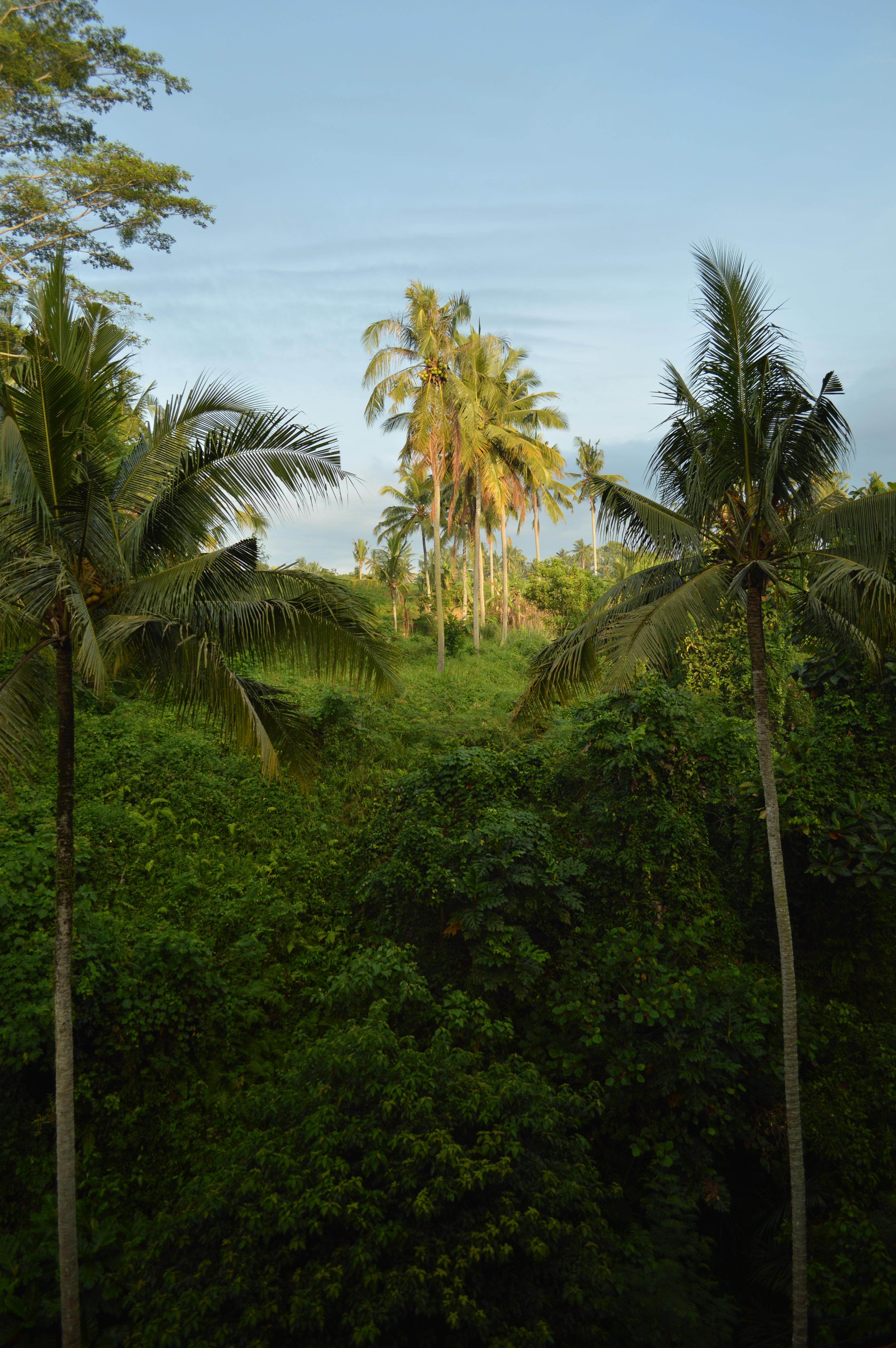
On waking on the day of silence I was able to be fully present in my surroundings to explore the splendor of nature.  To notice the vibrant colours of the birds, the vivid and varied shades of green of the jungle, to  see dragonflies and insects industriously going about their day.   Everything I observed seemed to leap out at me …as if I was truly seeing it for the first time.

DSC_1288

Each mouthful of food was savoured as there was no distraction from conversation to the business of eating.  I was able to discern subtle differences in taste and texture..my sense of smell was heightened.

There is something very freeing about not having to speak to anyone..to make conversation ( which I might add I normally love!).

I spent my time simply using my senses to be fully present at each moment as the day stretched out.  It seemed almost timeless with no pressure to be anywhere or do anything in particular.

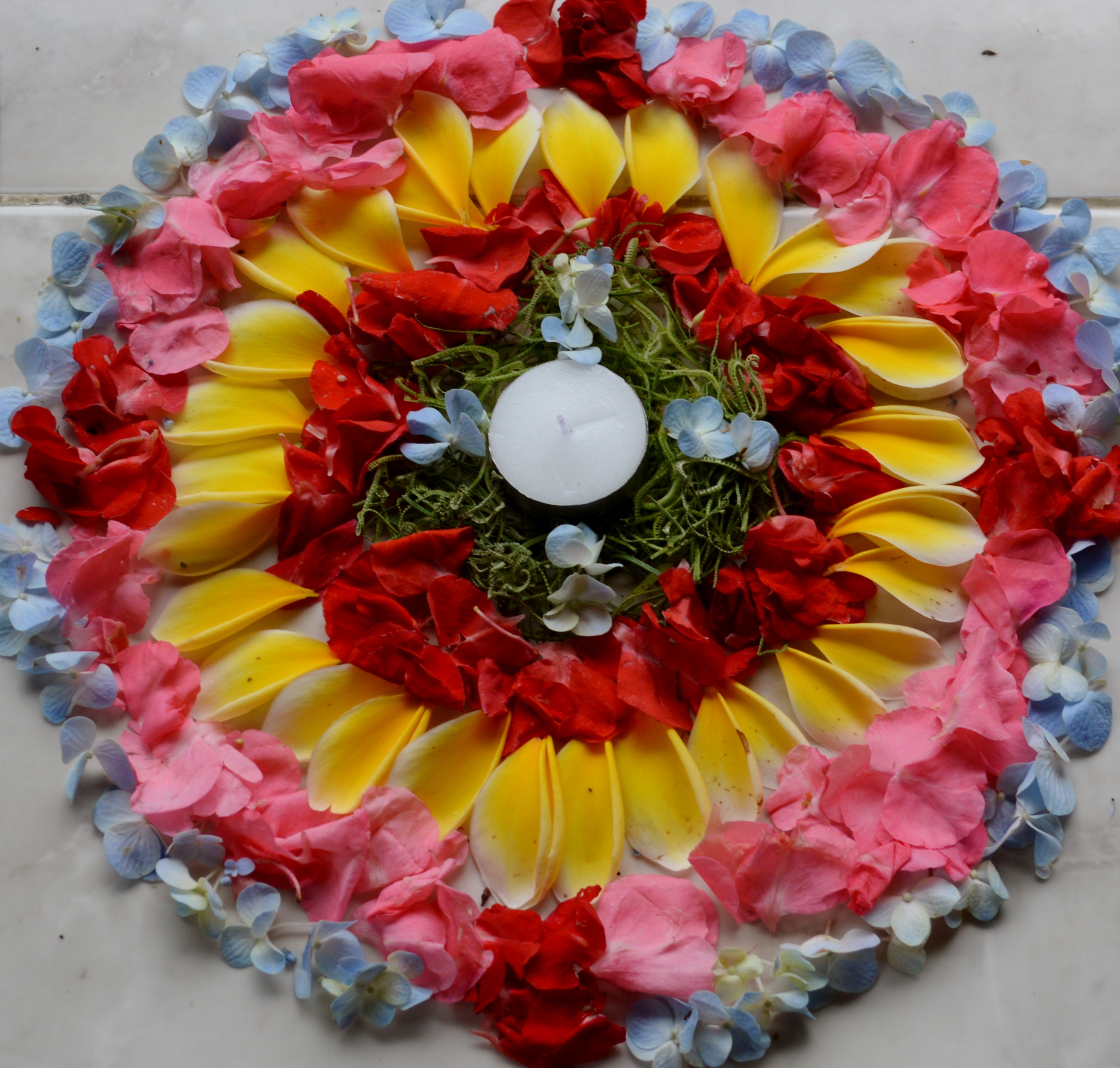
We were given instruction to try to avoid reading as reading in itself engages the left brain.  If anything we were encouraged to explore using our right brain….to be creative.  I chose to make a flower mandala and found this to be very calming.  Playing with the colours and textures of the flowers felt so natural and I was soon deeply engrossed in the activity.

mandala

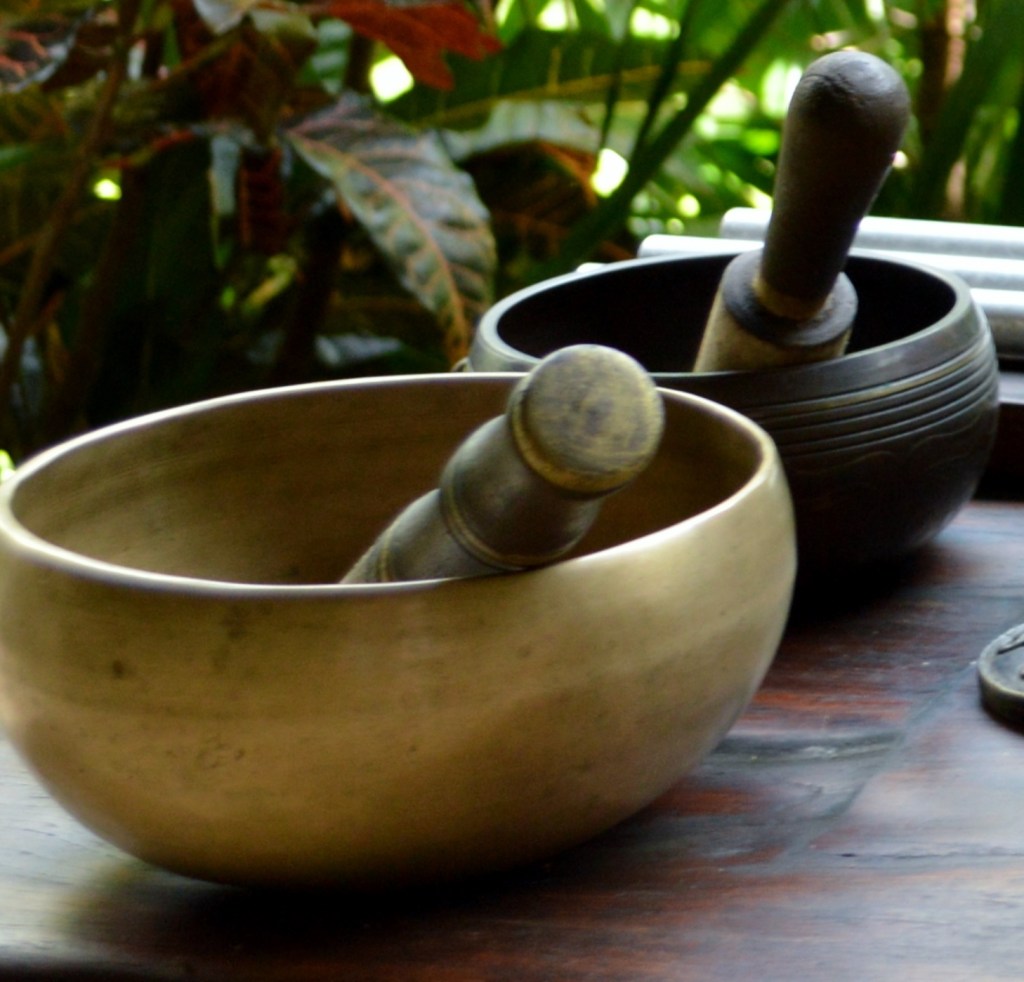
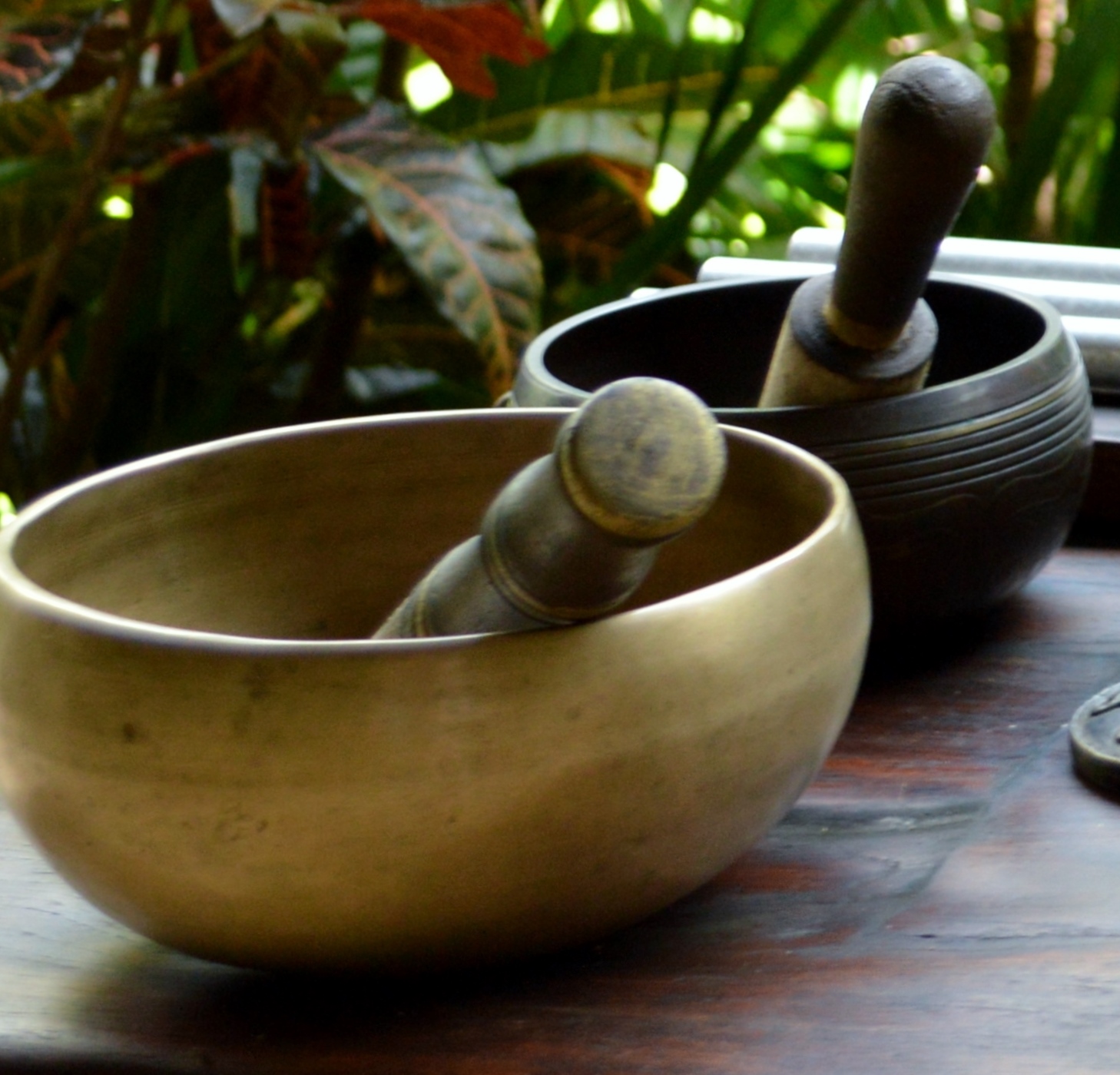
Earlier in the day I spent time simply staring out into the jungle whilst  using the singing bowl ….feeling the vibration of the sound in my whole body.  Eventually every cell in my body began to sing with the sound.

singing bowl

It was not until the following morning after practicing our sun salutations to the rising sun overlooking Lake Batar and the surrounding volcanoes that we were able to speak again.

DSC_1305

It felt strange to hear the chatter of voices and although I was pleased to talk with others and share my experiences I could not help feeling a little sad that the time of silence was over. Experiencing a day like this is something we could all incorporate into our lives, allowing  the richness of silence to fill our hearts, minds and souls…it is so refreshing!

Quote

Sideways stretching

In all of my classes I try to include some sideways stretching of the body.  In our normal everyday activities the muscles on the sides of the body do not get a lot of stretching and strengthening  yet they are very important in maintaining good posture.

The muscles we are talking about here in particular are the obliques, serratus anterior and the lattisimus dorsi.  Twisting practices are excellent for stretching these muscles as are practices which require you to lengthen each side of the body whilst contracting the muscles in the opposite side.  A great practice to awaken and work with these muscles is Tiriyaka Tadasana  or swaying palm tree pose.  In this standing posture the hips remain facing the front whilst the torso  moves from side to side with arms above the head.

It is important to make sure that the body does not lean forward or back whilst practising.   I like to visualise the body between two panes of glass…unable to move forward or back only side to side.

“The tendency in bending sideways is always to twist the pelvis or the         shoulders. We can help prevent this by flattening the lower back and tucking         the tailbone under before doing postures like Trikonasana variation 3         (triangle sliding the hand down the side of the leg).

101_7876

Another way to fix  the pelvis so that it cannot rotate is either by squatting against the  wall, or by beginning in Shashankasana (child pose) and bending to the  side.”  (Swami Bhaktipoornananda Saraswati 2000 Yoga Magazine)


101_7866

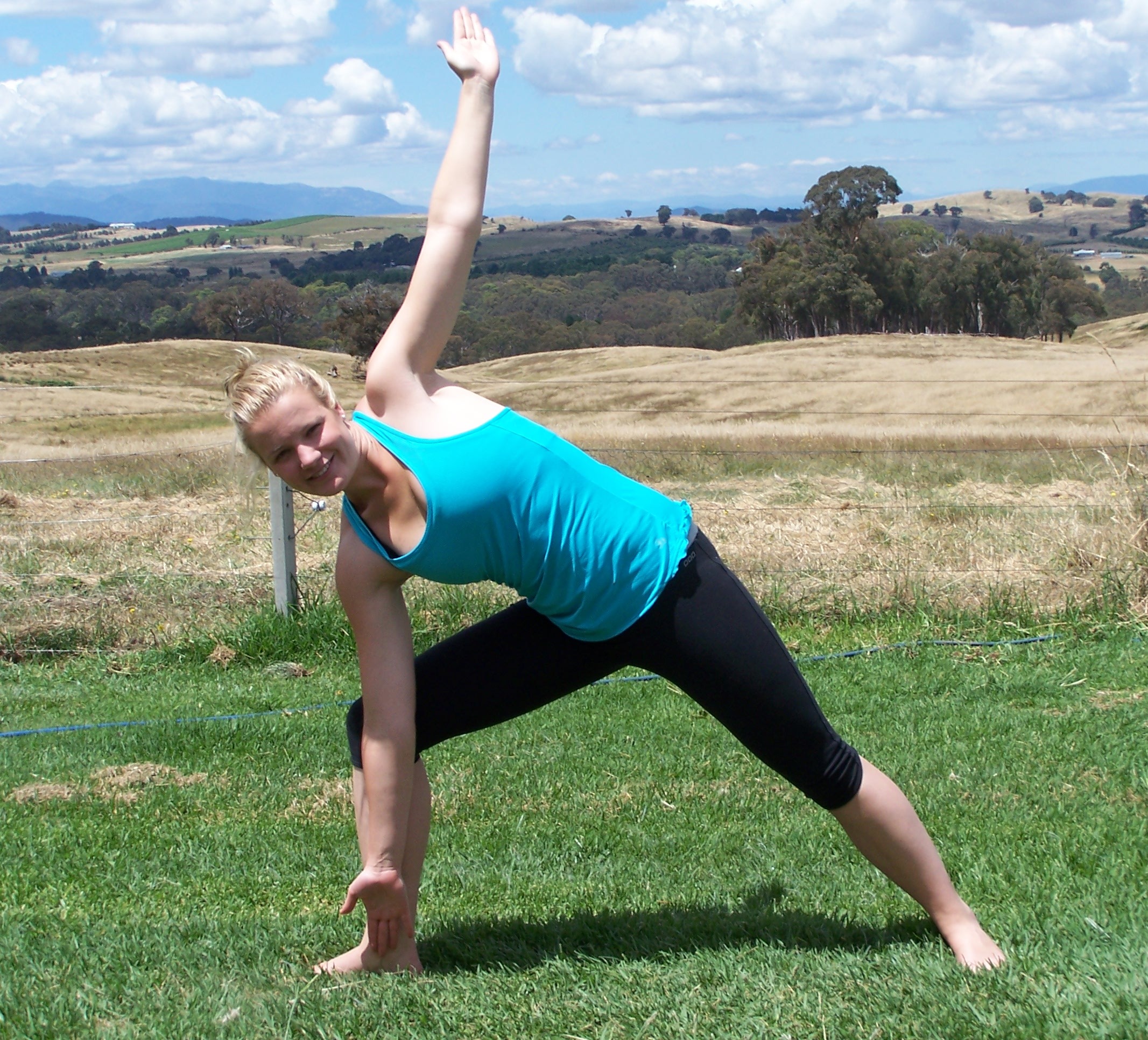
Stronger sideways stretching is achieved in Trikonasana or triangle pose.

In Trikonasana the aim is to eventually straighten the legs whilst leaning to the side and taking the hand to the foot…however for most people this is not achieved without leaning forward which diminishes the effect of the sideways stretch.  Initially you should practice with the knee bent and only take the hand as far as it will comfortably go whilst keeping the pelvis fixed.  Again a  good way to practice this is by practicing against a wall …you will soon discover if you are leaning forward!

Aside from stretching the muscles in the sides of the body Trikonasana strengthens the legs , knees, ankles arms and chest and helps open the hips groin and hamstrings.  There is also a benefit to  internal organs with the gentle massage of the digestive system that occurs.


What shapes your life- drama or Dharma?

And the blossom unfolds

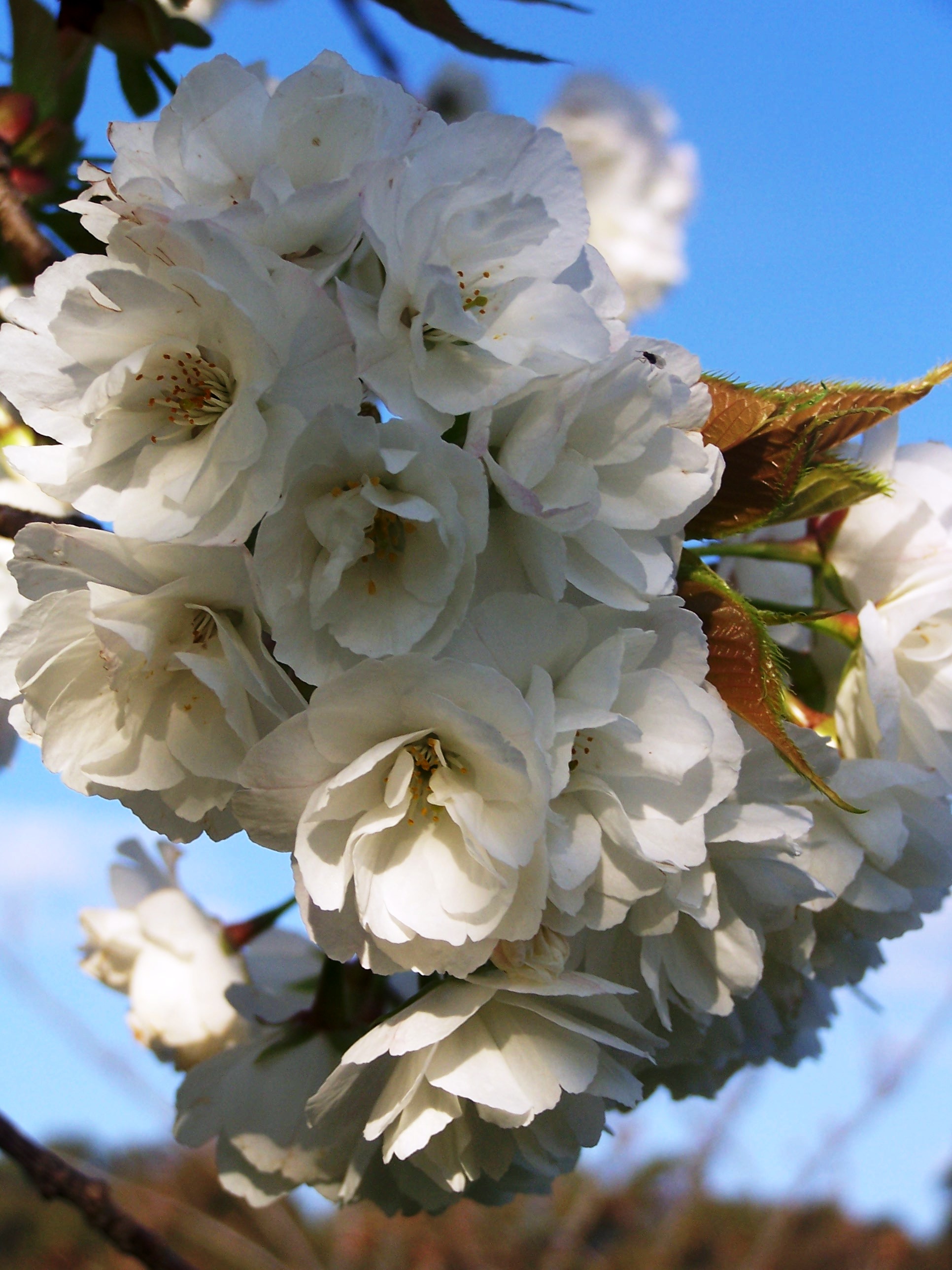
The blossom unfolds

As the change of seasons continues  I find myself contemplating the wonders of nature.  So much can be learned by spending time in nature and really seeing what is happening.  The birds are being industrious and raising their young, seeds are forging their way through the dark soil to emerge into the light, each plant relishes the cleansing rains, the warmth of the sun, whilst all of the insects are busy going about their business.  What has this got to do with Yoga you ask???

Well I am guessing that the birds here are not worrying about what will happen to themselves or their young in a few days, months, years.  The insects are simply following some inbuilt understanding of what it is they are meant to be doing in their life.  The plants are trusting that the light and the rain will be there to cleanse and nurture them.  Unlike us these living things are not obsessed with “getting it right”,  making sure that they prevent any foreseeable or unforeseeable disasters, or living a life that someone or something else dictates.

In yogic terms they are following their Dharma..they have an intrinsic understanding and trust in their own nature,  something that so many of us sadly lack .  Swami Niranjan said that “Dharma does not mean religion but commitment to the process of attaining total fulfillment………it cannot be understood by the intellect, the limited mind. Dharma is an experience which unfolds spontaneously from within as one begins to understand one’s place in relation to the rest of creation and beyond.”

Of course this would lead you to wonder ” can we ever be totally fulfilled?  What is this total fulfillment that he is talking about?” I think the answer to this is yes.  Total fulfillment is achieved when you become truly aware of yourself..who you really are and your deep connection to all things..your heart is filled with compassion and love….you no longer feel the need to judge, criticise, fear. As my very intuitive daughter once told me ..”things just flow mum when you are on the right path”.  Does this mean you no longer have dramas?  Of course not!  Life by its very nature is colored by birth and death..of people, of dreams, of relationships.  Some of those little birds will not survive very long.  Some of the insects will lose their way and some of the plants will thrive whilst others die off..all of this is perfectly right.  It is our perception or judgement about it that can create the dramas.

How does yoga help us on this path?  To begin with the practice of asana allows us the opportunity for self-study—to observe the effects of the asana on the body..not with the aim of perfecting the pose but of understanding and transforming yourself. Yoga asana begins the inner journey.

By meditating we can observe the mind and this also helps with an understanding of ourselves.  We use pranayama or breathing practices to help balance the body and mind. When we  experience the ups and downs of life we can use these tools to ground ourselves to remind oneself that this too will pass just as the spring which has sprung will pass.

Self discovery…exploring our strengths and weaknesses gives the opportunity for self acceptance and once we begin to accept ourselves without guilt, and frustration we can begin to discover the natural role we have to play in life.  Life becomes more about Dharma than drama!

Photo: Asana...;-) :D


For more reading on Dharma:

Yoga Darshan Vision of the Upanishads by Sw Niranjananda Saraswati, Yoga Publications Trust, Munger, Bihar, India 2002

http://www.yogamag.net/archives/1998/esep98/dharma.shtml


Is your energy feeling a little low?

There is a selection of asanas concerned with improving the energy flow in the body and breaking down neuro-muscular knots.  This group is called the Shakti Bhanda asanas.  The word shakti  in sanskrit means energy and the word bhanda is a sanskrit word for holding or locking so  the shakti bhanda series of asanas is concerned with releasing the energy blocks within the body, mainly in the pelvic region, the spine and the chest.

These asanas are  particularly helpful for those whose energy is feeling low and needs a boost.  In winter you may find that long periods indoors, lack of sunlight and reduced exercise routines can lead to a reduction in your energy levels so this is a good time to explore the practices of  the Shakti bhanda group.

According to the APMB* these asanas clear the energy blockages, activate the heart and lungs and improve endocrine function.  They are  especially helpful for menstrual problems and can be used before and after pregnancy.

Some of the practices like Chakki Chalanasana (churning the mill) are excellent for toning the nerves and organs of the pelvis and abdomen whilst Namaskarasana (salutation pose) has a positive effect on the nerves and muscles of the thighs, knees, shoulders, arms and neck.  As this posture is practiced in a squatting position it also helps to increase the flexibility of the hips.

Kashtha Takshanasana (wood chopping pose)….. a favorite of mine, which can be performed squatting or standing  helps to open the hips and works the muscles of the back between the shoulder blades as well as the shoulders and the upper back muscles.

It is also useful to raise the prana shakti during times of lethargy by focusing on different types of breathing practices such as Bhastrika or the bellows breath.

This breathing practice where you focus on taking short sharp inhalations and exhalations through the nose generating  a pumping action in the abdomen, whilst the chest, shoulders and face remain relaxed, burns up toxins  and charges the pranic system, creating alertness, heat and arousing  body and mind.  The rapid exchange of air in the lungs increases the exchange of oxygen and carbon dioxide into and out of  the bloodstream., stimulating the metabolic rate and producing heat, flushing out wastes and toxins.  The practice of Bhastrika, however  is contraindicated for people with high blood pressure, heart disease, hernia, gastric ulcer, stroke, epilepsy and retinal problems.  Generally speaking    you should seek guidance from a teacher before commencing bhastrika as it is a strong practice and needs to be done correctly to be effective.

Of course another way to keep warm this winter and beat that winter sluggishness that often strikes about the middle of winter is to reconnect to your practice of Salute to the sun or Surya Namaskara.  The dynamic movement of this practice and the added visualisation of drawing within the qualities of the sun such as  vitality, light, warmth and life force have a profound effect on all levels.

for more information on shakti check out …http://www.yogamag.net/archives/1980/emay80/sechealth.shtml

* APMB or Asana, Pranayama,Mudra ,Bhanda by Sw Satyananda Saraswati Yoga Publications Trust, Munger , Bihar, India


Changing seasons, changing direction

Having just returned home from a wonderful yoga retreat in Bali with One World Retreats I have found myself looking out at the most glorious autumn color here in Beechworth.

autumn

The retreat in itself was a great opportunity to stop, reflect, challenge myself and meet new friends but returning home has reminded me that with the changing of each season we also get the opportunity to stop, reflect and challenge ourselves…you may even meet new friends ..people who will help you on your journey of inner discovery.

As the trees prepare for winter by shedding their leaves so too can we prepare for the next stage in our lives by looking at what is no longer serving us and letting it go.

We had a lovely ceremony in Bali where during the week each person was asked to write down on small bits of paper what we would like to let go of and at the end of the week we gathered together to burn these unnecessary thoughts or behaviors and send them off down the river with a colorful spray of flowers.  It was very moving for all and I somehow suspected that much of what we had written down would be the same! Bali retreat

We often find ourselves plagued with doubts, fears and negative thoughts,  all of which do nothing to serve our higher purpose but these patterns of thinking can be very hard to let go of as they are quite entrenched. The old saying that what you practice you get good at comes to mind here!!

So here is the challenging part!  To look closely at ourselves…not with anger and judgement but simply to observe the way we think and behave.  The practice of silence or mauna is a wonderful way to do just this.    Learning to be silent is a practice of pratyahara or withdrawal of the senses.  According to Swami Sivananda the practice of mauna develops will power.  It checks the impulse of speech and is a great help in the observance of truth.   Spend some time each day not interacting just watching and notice what is going on…you may be surprised! You may notice thoughts and patterns that you want to let go of and just like the autumn trees you can choose to release them.  You may even like to create a small ceremony for yourself ..using the autumn leaves.  It is up to you.

I know that it is not easy to let go and it may be that this becomes a regular practice of yours but then again the changing of the seasons is a regular practice too!