Tag Archives: healthy-living

What shapes your life- drama or Dharma?

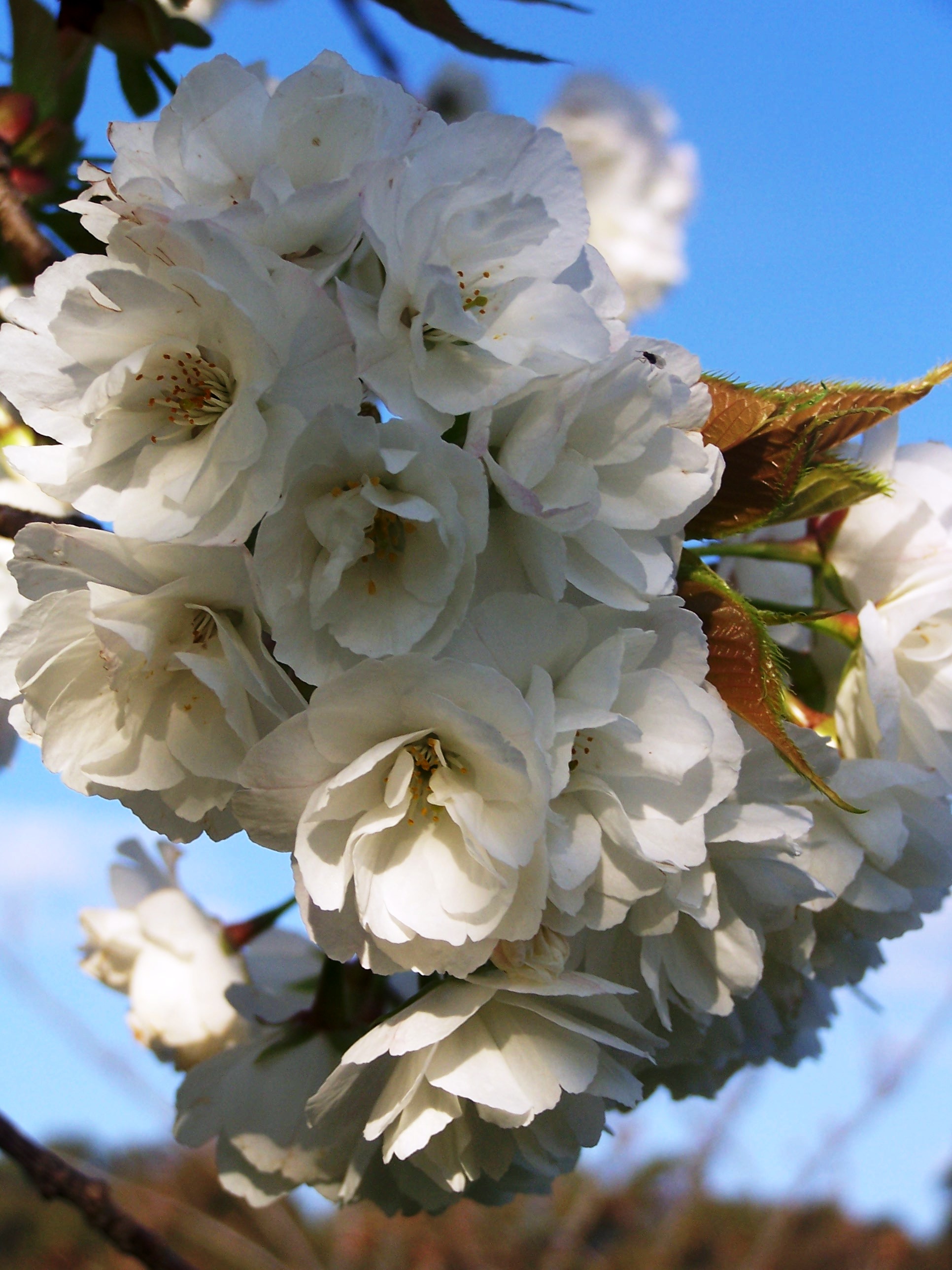
And the blossom unfolds

The blossom unfolds

As the change of seasons continues  I find myself contemplating the wonders of nature.  So much can be learned by spending time in nature and really seeing what is happening.  The birds are being industrious and raising their young, seeds are forging their way through the dark soil to emerge into the light, each plant relishes the cleansing rains, the warmth of the sun, whilst all of the insects are busy going about their business.  What has this got to do with Yoga you ask???

Well I am guessing that the birds here are not worrying about what will happen to themselves or their young in a few days, months, years.  The insects are simply following some inbuilt understanding of what it is they are meant to be doing in their life.  The plants are trusting that the light and the rain will be there to cleanse and nurture them.  Unlike us these living things are not obsessed with “getting it right”,  making sure that they prevent any foreseeable or unforeseeable disasters, or living a life that someone or something else dictates.

In yogic terms they are following their Dharma..they have an intrinsic understanding and trust in their own nature,  something that so many of us sadly lack .  Swami Niranjan said that “Dharma does not mean religion but commitment to the process of attaining total fulfillment………it cannot be understood by the intellect, the limited mind. Dharma is an experience which unfolds spontaneously from within as one begins to understand one’s place in relation to the rest of creation and beyond.”

Of course this would lead you to wonder ” can we ever be totally fulfilled?  What is this total fulfillment that he is talking about?” I think the answer to this is yes.  Total fulfillment is achieved when you become truly aware of yourself..who you really are and your deep connection to all things..your heart is filled with compassion and love….you no longer feel the need to judge, criticise, fear. As my very intuitive daughter once told me ..”things just flow mum when you are on the right path”.  Does this mean you no longer have dramas?  Of course not!  Life by its very nature is colored by birth and death..of people, of dreams, of relationships.  Some of those little birds will not survive very long.  Some of the insects will lose their way and some of the plants will thrive whilst others die off..all of this is perfectly right.  It is our perception or judgement about it that can create the dramas.

How does yoga help us on this path?  To begin with the practice of asana allows us the opportunity for self-study—to observe the effects of the asana on the body..not with the aim of perfecting the pose but of understanding and transforming yourself. Yoga asana begins the inner journey.

By meditating we can observe the mind and this also helps with an understanding of ourselves.  We use pranayama or breathing practices to help balance the body and mind. When we  experience the ups and downs of life we can use these tools to ground ourselves to remind oneself that this too will pass just as the spring which has sprung will pass.

Self discovery…exploring our strengths and weaknesses gives the opportunity for self acceptance and once we begin to accept ourselves without guilt, and frustration we can begin to discover the natural role we have to play in life.  Life becomes more about Dharma than drama!

Photo: Asana...;-) :D


For more reading on Dharma:

Yoga Darshan Vision of the Upanishads by Sw Niranjananda Saraswati, Yoga Publications Trust, Munger, Bihar, India 2002

http://www.yogamag.net/archives/1998/esep98/dharma.shtml


Is your energy feeling a little low?

There is a selection of asanas concerned with improving the energy flow in the body and breaking down neuro-muscular knots.  This group is called the Shakti Bhanda asanas.  The word shakti  in sanskrit means energy and the word bhanda is a sanskrit word for holding or locking so  the shakti bhanda series of asanas is concerned with releasing the energy blocks within the body, mainly in the pelvic region, the spine and the chest.

These asanas are  particularly helpful for those whose energy is feeling low and needs a boost.  In winter you may find that long periods indoors, lack of sunlight and reduced exercise routines can lead to a reduction in your energy levels so this is a good time to explore the practices of  the Shakti bhanda group.

According to the APMB* these asanas clear the energy blockages, activate the heart and lungs and improve endocrine function.  They are  especially helpful for menstrual problems and can be used before and after pregnancy.

Some of the practices like Chakki Chalanasana (churning the mill) are excellent for toning the nerves and organs of the pelvis and abdomen whilst Namaskarasana (salutation pose) has a positive effect on the nerves and muscles of the thighs, knees, shoulders, arms and neck.  As this posture is practiced in a squatting position it also helps to increase the flexibility of the hips.

Kashtha Takshanasana (wood chopping pose)….. a favorite of mine, which can be performed squatting or standing  helps to open the hips and works the muscles of the back between the shoulder blades as well as the shoulders and the upper back muscles.

It is also useful to raise the prana shakti during times of lethargy by focusing on different types of breathing practices such as Bhastrika or the bellows breath.

This breathing practice where you focus on taking short sharp inhalations and exhalations through the nose generating  a pumping action in the abdomen, whilst the chest, shoulders and face remain relaxed, burns up toxins  and charges the pranic system, creating alertness, heat and arousing  body and mind.  The rapid exchange of air in the lungs increases the exchange of oxygen and carbon dioxide into and out of  the bloodstream., stimulating the metabolic rate and producing heat, flushing out wastes and toxins.  The practice of Bhastrika, however  is contraindicated for people with high blood pressure, heart disease, hernia, gastric ulcer, stroke, epilepsy and retinal problems.  Generally speaking    you should seek guidance from a teacher before commencing bhastrika as it is a strong practice and needs to be done correctly to be effective.

Of course another way to keep warm this winter and beat that winter sluggishness that often strikes about the middle of winter is to reconnect to your practice of Salute to the sun or Surya Namaskara.  The dynamic movement of this practice and the added visualisation of drawing within the qualities of the sun such as  vitality, light, warmth and life force have a profound effect on all levels.

for more information on shakti check out …http://www.yogamag.net/archives/1980/emay80/sechealth.shtml

* APMB or Asana, Pranayama,Mudra ,Bhanda by Sw Satyananda Saraswati Yoga Publications Trust, Munger , Bihar, India


Changing seasons, changing direction

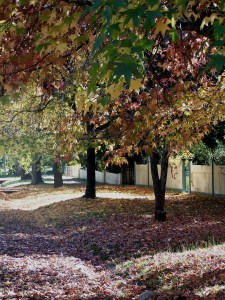
Having just returned home from a wonderful yoga retreat in Bali with One World Retreats I have found myself looking out at the most glorious autumn color here in Beechworth.

autumn

The retreat in itself was a great opportunity to stop, reflect, challenge myself and meet new friends but returning home has reminded me that with the changing of each season we also get the opportunity to stop, reflect and challenge ourselves…you may even meet new friends ..people who will help you on your journey of inner discovery.

As the trees prepare for winter by shedding their leaves so too can we prepare for the next stage in our lives by looking at what is no longer serving us and letting it go.

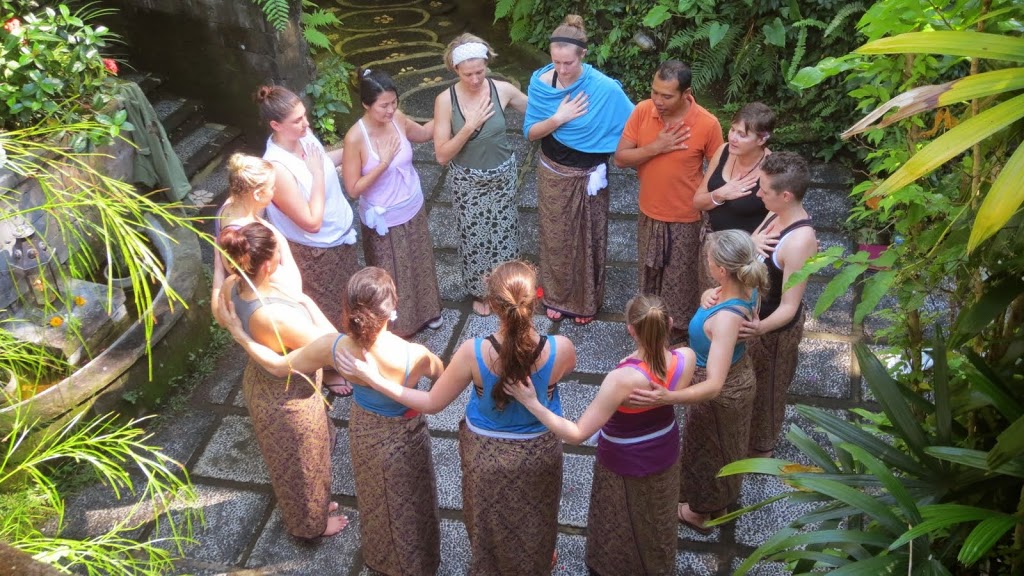
We had a lovely ceremony in Bali where during the week each person was asked to write down on small bits of paper what we would like to let go of and at the end of the week we gathered together to burn these unnecessary thoughts or behaviors and send them off down the river with a colorful spray of flowers.  It was very moving for all and I somehow suspected that much of what we had written down would be the same! Bali retreat

We often find ourselves plagued with doubts, fears and negative thoughts,  all of which do nothing to serve our higher purpose but these patterns of thinking can be very hard to let go of as they are quite entrenched. The old saying that what you practice you get good at comes to mind here!!

So here is the challenging part!  To look closely at ourselves…not with anger and judgement but simply to observe the way we think and behave.  The practice of silence or mauna is a wonderful way to do just this.    Learning to be silent is a practice of pratyahara or withdrawal of the senses.  According to Swami Sivananda the practice of mauna develops will power.  It checks the impulse of speech and is a great help in the observance of truth.   Spend some time each day not interacting just watching and notice what is going on…you may be surprised! You may notice thoughts and patterns that you want to let go of and just like the autumn trees you can choose to release them.  You may even like to create a small ceremony for yourself ..using the autumn leaves.  It is up to you.

I know that it is not easy to let go and it may be that this becomes a regular practice of yours but then again the changing of the seasons is a regular practice too!


Maintaining the momentum

Have faith ...keep following the path.

Have faith …keep following the path.

One of the difficulties you can encounter when you commit to any significant change in your life is maintaining the momentum.  People often come to yoga because there has been an impetus for change in their life.  They have decided that they need to “become more flexible”, “learn to relax” or “combat stress”.  Whatever the reason for commencing yoga there is guaranteed to be some benefits that you never expected and some times when you feel that because of changes in your circumstances or health,  it is difficult to maintain.

How do you maintain that momentum?  Well the first thing to realise is that yoga is all about listening to your body.  In some instances your body may just need some rest.  There may be times when the most important part of your practice is simply doing a yoga nidra and some breathing practices.  At other times sitting quiet and still for meditation may seem impossible and what is really needed is some solid asana practice to ground yourself.

Listening to where you are at is the first part, having compassion for yourself is essential.

That is a little harder for most of us. Living in a world where we are supposed to “toughen up”, “be strong” and “keep on going” is not such a compassionate place to be. Compassion requires really opening the heart and listening ….listening to the birds, listening to the breeze, listening to the breath, listening to the feelings and often makes one feel vulnerable but vulnerability in itself is a beautiful and honest expression of self. It does not mean that you put up with everything that is thrown at you and devalue your worth but it means being true to who you really are…that wonderous inner spirit of self.

So if you are having trouble hanging in there ….STOP…listen and love. Be gentle with the practices, do only what feels right not what you think you ought to be doing or what you used to be able to do and you will soon find that yoga WILL bring you back to your equilibrium, BUT please be patient !!!


A Fresh Start

Well, over two weeks in to the start of 2013 and I am curious as to what may have happened to all those well-intentioned New Year’s  resolutions???

It is easy to sit down and wish for things to be different – for life to change in some way.  What is harder is to actually make lasting changes that help us in fulfilling our Sankalpa or resolve.

My daughter was holidaying with me during the festive season and on December 31st she sat down to prepare her vision board.  “You know mum”, she said to me. “Everything on my vision board from this last year has come into being”.  Having thought about this for a while I was able to see the power of the vision board.  Not just a decorative wall hanging but a constant visual reminder of the things that are important to you and that you are working toward in your life.

If you relate this back to the concept of Sankalpa (see Jan 2012 post) in which Swami Niranjan stated, “it is not merely a wish, it is a process of training the mind to develop the will and to develop clarity of thought”. The Sankalpa then works to sustain motivation and drive as you work toward your goal.

So the vision board is really a tool to keep you focused on your life’s  goal.  There may well be a number of other smaller goals that will ultimately help you to realise your life’s goal.  For example a Sankalpa for inner peace may require you to work on your relationships with others and your relationship with the divine.   You may need to change jobs, to root out old ways of behaving and perceiving things, to learn to be content when your usual nature is discontent.   All of the things in this example require effort and work in the present…the vision board reminds you that the present is here and now …not in 2 weeks, 2 months or 2 years from now.  It is what you are working on right now!

The seed of the largest tree begins as a seed..but implanted in its DNA is the potential for the greatness of the tree…it does not know limitation.  Likewise do not let yourself be intimidated by any sense of limitation…allow yourself to reach your full potential in all aspects of your life and if you need another tool to help you, go on…….. make a vision board!   beechworth 014

Glorious Spring

What better way to make the most of the beautiful spring weather than to take your home practice outdoors?  The mornings are still quite fresh but it does not take long for the warmth of the sun to penetrate the body and combined with stimulating asanas,  pranayama and a relaxing meditation the effect can be perfect.

Being in touch with nature is such a good way to ground yourself.  Feeling the grass beneath your feet and hearing the sounds of birds as they go about their early morning activities is also a great way to connect with something bigger than yourself.

You might try starting with some  standing asanas to loosen the back and sides such as Tiriyaka Tadasana (swaying palm tree) Tadasana (heavenly stretch)  and Kati Chakrasana (waist rotating pose). This little combination is often referred to as TTK in the Satyananda tradition and it is part of a sadhana recommended by Swami Niranjan in 2006.   Even Surya Namaskara can be used as a warm up however you may like to do Marjariasana (cat pose) in place of Ashtanga Namasakara (eight limb pose) and Bhujangasana (cobra pose) in the first few rounds.  Once you are warmed up then you can  lie down on the mat (or grass if dry) and work through some of your favourite asanas.

Yoga everywhere

Using twists to get the kinks out of your life!

There are a number of reasons why you should include a twisting posture in your home practice sessions.  Even the simplest of twists such as Kati Chakrasana or the waist rotating pose can provide excellent benefits such as the toning of abdominal muscles, massage of abdominal organs and stimulation of the digestive system.

According to Bhaktipoornananda, ” When we twist the body it is the thoracic spine that  twists most, not the lumbar spine. When we have one leg shorter than the  other we get a lot of wear and tear on the junction between the 12th thoracic and the 1st lumbar vertebrae because the twist on the pelvis is imbalanced  as we walk. The lumbar spine does not turn much so this lob-sidedness  increases wear and tear on the first vertebra designed to twist (i.e.  12th thoracic).

Meru wakrasana (spinal twist) and ardha matsyendrasana (half spinal twist) are important twisting practices  which keep the whole spine supple without straining ligaments. They should  be practised initially with one hand resting close to the sacrum and the  arm straight so that it lifts the back upright and supports it.”                        (Swami Bhaktipoornananda Saraswati  2000)

Many of the twists are actually practiced from a sitting position you need to prepare sufficiently by strengthening the trunk and developing flexibility in the legs and back…so having a good sitting posture is important.  Often beginners will need to raise the buttocks slightly by sitting on a folded blanket or firm cushion.

Twisting practices help to improve the flexibility of spinal joints and muscles and stimulate the spinal nerves. They encourage digestion  and energy flow in the abdomen.  Twists also promote strength and flexibility in the trunk muscles.

On a psychic or mental level practising twists and learning to relax into these positions will help  you to realise that you can breathe through the more “knotty”or difficult parts of life. That these “kinks” in life merely serve to strengthen our core if we remain centred and move with the flow of breath.

Often people find a great sense of relief after practising twists ….as if the twist itself has allowed something on a deeper level to be released.

As with all asana practice awareness of where your body is at and it’s limitations is important.  Beginners need to be careful not to twist the trunk more than flexibility will allow and those people with serious back complaints would need to consult with their health professional prior to practising.

Mantras matter

The use of Mantras adds a whole new dimension to your yoga practice whether it be simply chanting the Surya or Beeja mantras as you practice the series Surya Namasakara or if you spend some time chanting the Mahamrityunjaya mantra or the Gayatri mantra as part of your home practice.

Both of these mantras like all mantras  have a powerful effect on the body and mind by connecting you to higher vibration, with the mind and body  becoming  filled  with something that is positive and uplifting.

The continued  repetition of the mantras (or just listening to these vibrations) can cause changes within the chanter or even to the environment. Some of the immediate changes include relaxation as the sympathetic and parasympathetic nervous systems are brought into balance. Other potential benefits include improvements in the voice and lifetime changes like attaining self-realization.

According to Swami Niranjananda “mantra  is the force that liberates the mind from bondage”

Many people get caught up in trying to understand the literal meaning of mantras and whilst it is pleasant to know the translation of the mantra it is not essential for the mantra to have its effect.  For it is the vibration that counts.  These ancient Vedic sounds resound within the body and the external environment, uplifting both energy levels and thought patterns.

To hear the Gayatri  Mantra go to http://www.satyananda.net/prasad  and go to audio then  Gayatri Mantra

(try listening to this without knowing what the words mean first!!!!….then if you must know check out the next post!)

for more on Mantra……

http://www.yogamag.net/archives/1980/fjune80/manmind.shtml

Salute to the Sun…Surya Namaskara

As winter settles it can be difficult to keep active and vitalised.  Levels of  energy can drop quickly  and one of the best ways I know to keep the pranic energy active is through the practice of Surya Namaskara or “salute to the sun”.

This practice  combines  several asana or postures into a series of 12 movements each designed to stimulate different parts of  the body and in this way all the body systems are massaged,  charged with energy and finally relaxed.

The sun in Surya Namaskara represents your inner light…it helps you to recognise the radiance and power within yourself…your potential to expand beyond the known into higher realms of clarity and consciousness.

Care must be taken to become familiar with each pose and maintain the correct alignment so slow practice is best to begin with.  This can be accompanied with slow rhythmical breathing to strengthen, stabilise and to take the awareness within the body (pratyahara).  Once you are familiar with the practice you may wish to practise more quickly, making the practice more energising and revitalising.

The practice of Surya Namaskara can be modified to suit different levels of yogic experience and different physical abilities. (you could talk to your teacher about this)

This practice is both a physical and mental practice as you need to concentrate on the transition from one posture to the next  and counting the number of rounds you have decided to do.  Swami Niranjan suggests that 4 rounds each day is sufficient for general health and wellbeing whilst practising 10 rounds each day will lead to higher levels of spiritual development.

You may have experienced practising Surya Namaskara whilst mantras have been repeated for you and if you can learn these they will strengthen  and uplift the mental state making the practice a complete sadhana.

It is wise to always rest in Shavasana after completing the practice of Surya Namaskara.  This allows the full benefits of the practice to be integrated as the para sympathetic nervous system is able to “kick in” so to speak after the activity of the sympathetic nervous system (stimulated by the practice) and the body is brought back into balance.  Resting until the heart rate and breathing returns to normal is recommended.

For more information on solar energy and the practice of Surya Namaskara see the following link:

http://www.yogamag.net/archives/1977/haug77/solar.shtml

What is happening at home?

Home practice is one of the key elements to integrating yoga into your life.  It is often something which people find difficult to apply and the reasons vary from “not enough time’, “nowhere quiet and comfortable to practice” to “I can’t remember all the poses” and “I just don’t know how to sequence practices”.

Some of these may sound familiar to you if you have been putting off starting your own yoga practice at home.  You may well be attending weekly classes but have just not got around to finding time to explore yoga yourself in your own home.  One of the most rewarding things I have done is to establish a routine of home practice for myself. Sure there are times when I am too tired or not well enough but that is ok because Yoga is about listening to your body (but be careful that you are not listening to your mind..which has the habit of finding reasons why this or that is no good or not working!)

So how do you go about it?  Well the important thing is to begin….set aside a short period of time each day either early morning, or late afternoon. Do not restrict yourself with unrealistic expectations like “I will do a one and half hour class every day before I have breakfast.  (this may be quite easy to do at the ashram where you do not have your other obligations of family and work)  Start with a shorter session but try to allow enough time for a few asanas as well as some breathing practices and or relaxation.  This may even be making sure that you allow yourself 5-10 mins lying in Shavasana at the end of your other asanas.

Find a space that feels right.  It does not have to be huge.  You can enhance the energy and atmosphere with a candle and some incense if you have some. I have set up a small yoga room in one of the spare bedrooms but I often just go outside especially if the weather is good. ( I find that nature is the best atmosphere for me)

Let your body tell you what poses are right for you on each occasion.  Some will be repeated perhaps each day but sometimes you will just feel like doing one pose more than others.  Begin with gentle movements and warm the body up then try to balance the practices out a little with a few forward and backward bends, a couple of standing asanas, a twist and if inversions suit your body an inverted pose to increase the flow of blood to your brain (it is also a great way to gain a new perspective on something!)

Swami Niranjan suggested the practices of Tadasana, Tiryaka Tadasana and Kati Chakrasana  as excellent general practices for the spine.

I like to do at least some observation of the natural breath at the beginning and end of my practice and usually incorporate at least one other pranayama or breathing practice.  (A good one for beginners is abdominal breathing )

Do not despair if you find that your practice is a little erratic at times…show compassion to yourself …just roll out the mat once again and begin with stillness.  There is a great article in the current  issue of  Australian Yoga Life Magazine….sequencing a home practice if you would like to read more.