
One thing is certain and that is change. The last six months have once again taught me much about the changing nature of life, our expectations, circumstances and our ability to adapt. Much has been said about learning to develop resilience over the last few years but what exactly does that mean especially from a yogic perspective? One might describe resilience as the ability to successfully adapt to stressors, maintaining psychological well-being in the face of adversity, bouncing back, elasticity or toughness. Whilst these may well be good descriptors of resilience I think that from a yogic perspective we might use the word equanimity.
Through yoga practices we develop the capacity to find calmness and composure during difficult circumstances which are often present when changes occur whether these changes happen by us or to us. This does not mean that we are immune to the emotional attachment associated with what was and what appears to be different. We are not not talking about being cold and detached, showing no emotion but we can learn to take a step back and “see” where our thoughts are going, “notice” what is happening physically and emotionally.
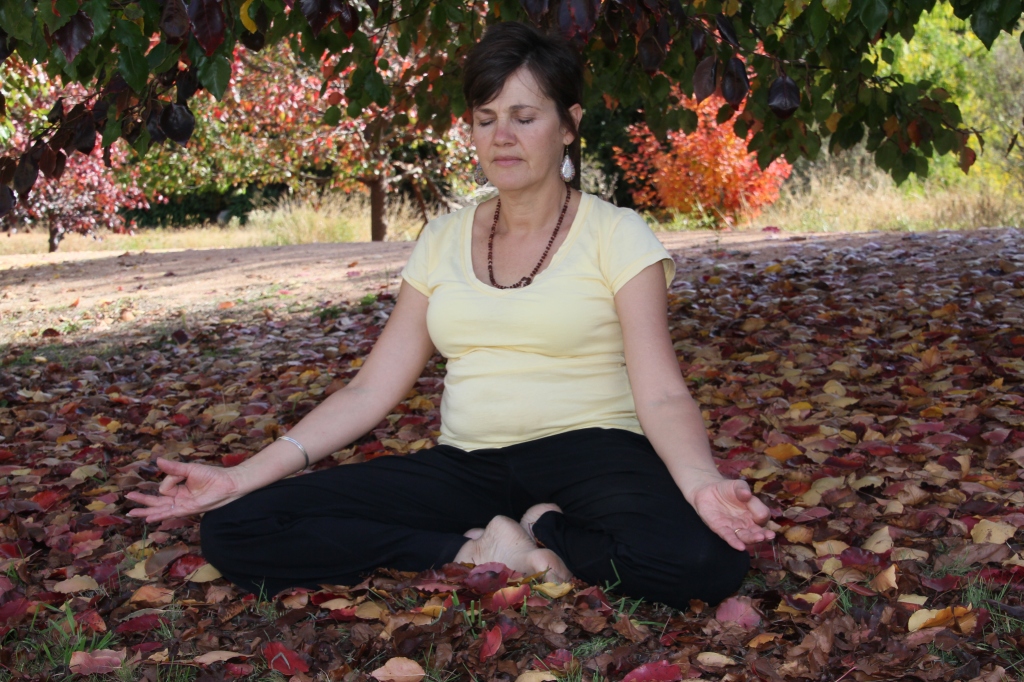
In the practice of meditation we are observing the thoughts, the heartbeat, the contact of body with floor, the air surrounding us and if it is a guided meditation you might be asked to draw your awareness to these things…working from the more gross sensory experiences to the subtle. The intention here is become the witness “the drashta” and not see yourself as your thoughts and emotions but one who has these thoughts or emotions. In this way the thoughts ( and let’s face it many of them are negative in difficult situations) and emotions lose their power over our actions. We move to a state where we are able to make right decisions coming not from fear, worry and anger but from a much deeper knowing of what is right. Some people might call this intuition but the yogis call it consciousness.
In the practice of yoga nidra, a guided relaxation, you will also be asked to move from the gross to the subtle …to observe the inner world. Once in this relaxed state you can repeat your positive affirmation, your sankalpa which is not a wish but something you are working on in your life. Your yoga teacher may also get you to experience opposites like cool and warmth, heavy and light giving opportunity for the mind to open up to any associated experiences which are hidden in the sub conscience. In the same way you may be given a number of things to visualise which may also release hidden tensions and experiences. It is not unusual for some students to cry during yoga nidra and to “awaken ” refreshed. If there are tears then you should let them come. If you are at all concerned about your experience you should speak with your yoga teacher or if necessary a counsellor especially if you are experiencing significant upheaval in your life.
So once again we see that yoga is much more than a series of postures performed on a mat. It is the development of awareness. Next time your day, your expectations, your life etc changes draw on your yogic toolbox and work towards equanimity. That is what I have been working on!





 Beechworth Yoga